|
Religion: Humanity’s Enduring Search for the Divine
Religion—or at least the belief in the supernatural, spiritual, or divine—has been a fundamental part of the human species since its earliest days. Archaeological evidence, combined with anthropological and historical research, demonstrates that humans across all cultures and eras have sought to connect with something greater than themselves.
Atheists and secular thinkers often argue that religion arose as a means to explain natural phenomena, cope with the unknown, and impose social order before the advent of critical thinking or scientific understanding. While this explanation has merit in describing certain aspects of religion’s function, I find the perspective of philosophers, theologians, and great thinkers far more compelling: religion reflects an innate human longing for God. As Blaise Pascal famously wrote, humanity possesses a “God-shaped vacuum” in its heart, a void that only God can fill. C.S. Lewis similarly observed that the pervasive yearning for the transcendent in every culture points to humanity’s origin in God and a distant memory of a lost relationship with Him.
Theologians like St. Augustine have also described this intrinsic yearning for God as the hallmark of humanity’s divine origin. Augustine wrote in his Confessions:
“You have made us for yourself, O Lord, and our hearts are restless until they rest in you.”
This idea, shared by many religious traditions, posits that humans were created for communion with the divine but, at some point in pre-history, lost that close relationship. As a result, people have sought to reconnect with God across cultures and centuries, expressing this search through art, ritual, philosophy, and worship.
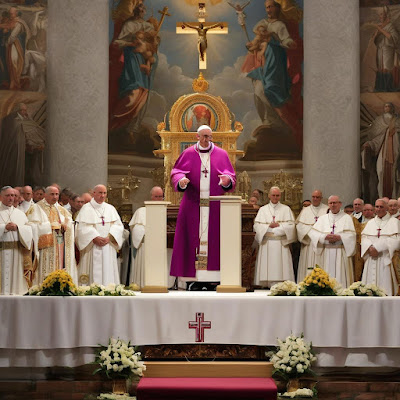
To understand how this yearning shaped human civilization, we can take a journey through the history of religious belief, from the burial practices of early humans to the rise of the Catholic Church—a faith I believe provides the ultimate answer to humanity’s spiritual longing.
Tracing the History of Religious Belief
Below, I will expand on humanity's search for the divine and the ways this quest has been expressed through time, culminating in what I see as the fulfillment of this universal yearning: the Catholic Church.
A History of Religion: From Early Humans to the Catholic Church
Religion is a universal aspect of human culture, appearing in various forms throughout history. By examining archaeological evidence, anthropological theories, and historical records, we can trace the evolution of religious and spiritual beliefs from the earliest humans to the founding of the Catholic Church.
1. Early Humans and the Dawn of Spirituality
Prehistoric Religious Practices

Evidence suggests that even pre-modern humans, including Neanderthals, exhibited behaviors associated with religious or spiritual beliefs:
- Burial Practices: Archaeological evidence shows that Neanderthals buried their dead with care, often including tools, flowers, or other items. A notable example is the Shanidar Cave in Iraq, where Neanderthals were buried alongside pollen from flowers, possibly indicating ritualistic or symbolic practices.
- Symbolism and Art: The earliest known cave art, such as the paintings in El Castillo, Spain (dated to at least 40,000 years ago), and objects like the Lion-Man figurine from Germany (c. 40,000 BCE), suggest that early humans engaged in symbolic thinking—a precursor to religious belief.

Anthropologists theorize that early humans developed a belief in the supernatural as a way to explain natural phenomena and cope with death, leading to the emergence of animism—the belief that spirits inhabit animals, plants, and natural forces.
2. The Development of Organized Religion
Animism and Shamanism

During the Paleolithic era, most human societies practiced animism. Archaeological evidence from hunter-gatherer societies suggests the presence of shamans, individuals who acted as intermediaries between the spiritual and physical worlds. These figures likely conducted rituals to influence hunting success, weather, or fertility.
Neolithic Revolution (10,000 BCE)
The transition to agriculture and sedentary life brought profound changes to religious practices. Larger, more complex societies required organized rituals and deities associated with agriculture and fertility:

- Göbekli Tepe (c. 9600 BCE): Located in modern-day Turkey, this site features massive stone pillars carved with animal motifs, suggesting organized worship long before cities or writing existed.
- Catalhöyük (c. 7500 BCE): In modern Turkey, this settlement includes shrines and wall paintings, such as depictions of bull worship, pointing to early communal religious practices.
The Rise of Polytheism in Ancient Civilizations
The development of polytheism in ancient civilizations, such as Sumer and Egypt, marked a transformative era in the history of religion. These cultures created elaborate pantheons of gods, often tied to natural forces, political authority, and human needs. Polytheism provided a framework for understanding the world, building social cohesion, and reinforcing the power of rulers. The religions of Mesopotamia and Egypt, with their rich traditions and mythologies, not only influenced each other but also left a lasting impact on the development of monotheistic faiths like Judaism and Christianity.
1. Sumerian Religion (c. 3000 BCE)
The Pantheon of Gods
The Sumerians, who established some of the world’s first cities, such as Ur and Uruk, developed a polytheistic religion centered on a pantheon of gods. Each deity had distinct roles and attributes tied to natural phenomena or aspects of human life:
- Anu: The god of the sky and the supreme authority in the divine hierarchy. Anu’s role as the "father of gods" provided a template for the concept of a supreme deity in later traditions.
- Enlil: The storm god and one of the most powerful figures in the Sumerian pantheon. Enlil controlled weather, fertility, and the destinies of humankind. His domain over life and death would later find echoes in the depiction of YHWH in the Hebrew Bible as a god who controls nature and human fate.
- Inanna (later Ishtar): The goddess of love, fertility, and war. Inanna’s complexity as both a life-giver and a destructive force influenced later depictions of divine femininity in neighboring cultures.
These deities were anthropomorphic, exhibiting human-like emotions, rivalries, and interactions, which shaped later theological and narrative structures in ancient literature and scripture.

Ziggurats and Worship
The Sumerians built massive temple complexes called ziggurats, such as the one at Ur, dedicated to their gods. Ziggurats served as physical and spiritual centers of city-states, symbolizing the connection between heaven and earth. Rituals, sacrifices, and offerings were performed to appease the gods and ensure prosperity. These structures and practices influenced later temple-based worship, such as the First Temple of Jerusalem, which shared a similar emphasis on a central sacred site as a focal point for divine presence and human devotion.

The religious ideas of Mesopotamia may have influenced the development of biblical narratives and theological concepts:
- The Epic of Gilgamesh, a Sumerian literary masterpiece, includes a flood narrative with parallels to the story of Noah in Genesis 6-9. Both stories depict divine judgment through a catastrophic flood, with a righteous man instructed to build an ark to preserve life.
- The concept of divine kingship, central to Sumerian religion, may have influenced the biblical portrayal of leaders like David and Solomon as God’s chosen representatives.
Scholars such as Thorkild Jacobsen (The Treasures of Darkness) suggest that the gradual evolution of religious thought in Mesopotamia, from animism to organized polytheism, set the stage for the eventual rise of monotheism in the Levant.
2. Egyptian Religion (c. 3000 BCE)
Gods and the Afterlife
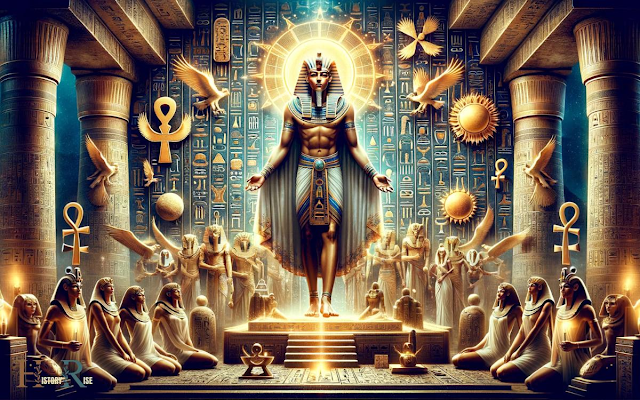
Religion in ancient Egypt was deeply intertwined with political authority and the promise of an afterlife. The Egyptian pantheon included numerous gods, each representing aspects of nature, society, or the cosmos:
- Ra: The sun god and chief deity, often depicted as traveling across the sky in his solar barque. Ra’s association with creation and renewal parallels later monotheistic ideas of a creator deity.
- Osiris: The god of the afterlife, resurrection, and fertility. The myth of Osiris, involving his death and resurrection, became central to Egyptian beliefs about life after death and influenced later concepts of divine salvation in Christianity.
- Isis: A maternal goddess associated with healing and protection, revered for her devotion to Osiris and Horus. Her widespread veneration across the Mediterranean later influenced the Christian portrayal of Mary as a maternal and intercessory figure.
Divine Kingship
Egyptian religion was also centered on the belief that pharaohs were divine intermediaries, embodying the gods’ authority on earth. Pharaohs were seen as the sons of gods, a concept that likely influenced the biblical notion of the Davidic king as the "son of God" (2 Samuel 7:14) and later Christian theology regarding Jesus as the divine King.
The Pyramid Texts and the Eternal Afterlife
The construction of monumental pyramids, such as the Great Pyramid of Giza, was a reflection of the Egyptian obsession with the afterlife. Texts inscribed in tombs and temples, such as the Pyramid Texts (c. 2400 BCE), describe the journey of the soul to the afterlife and its unification with the divine. This focus on resurrection and eternal life has clear parallels to Christian teachings on the resurrection of the dead and eternal salvation.
Influence on Judaism and Christianity
The Egyptian religious tradition may have influenced the development of Judaism and Christianity in several ways:
- The Exodus narrative, a foundational story in Jewish and Christian theology, directly engages with Egyptian religion. The plagues described in Exodus 7-12 symbolically undermine the authority of the Egyptian gods, asserting the supremacy of YHWH.
- The motif of divine deliverance and covenant, central to the Exodus, echoes Egyptian ideas of divine kingship and the gods’ intervention in human affairs.
3. Cross-Cultural Influence and Religious Evolution
The interplay between Mesopotamian, Egyptian, and later Israelite religious traditions reflects a shared cultural milieu in the ancient Near East:
- The idea of a divine covenant, central to Judaism, may have drawn on earlier models of treaties between kings and gods in Mesopotamia.
- Stories of creation, such as the Enuma Elish (Mesopotamia) and Egyptian creation myths, influenced the biblical creation account in Genesis 1-2, particularly the concept of a singular creator bringing order out of chaos.
- The emphasis on justice, morality, and divine judgment in Mesopotamian and Egyptian texts likely contributed to the ethical monotheism of the Hebrew Bible.
4. The Shift Toward Monotheism
The polytheistic frameworks of Sumer and Egypt laid the groundwork for the gradual emergence of monotheism in Israel:
- As Israelite religion evolved, YHWH absorbed attributes of earlier deities like El (the Canaanite high god) and Baal (storm god), consolidating them into a single, supreme deity.
- The prophetic tradition in Israel, beginning with figures like Elijah and Isaiah, emphasized the moral and universal aspects of YHWH, distinguishing Him from the capricious gods of polytheism.
This evolution culminated in the development of Christianity, which synthesized Jewish monotheism with elements of Greco-Roman and Egyptian religious traditions, such as the focus on resurrection and salvation.
Conclusion
The polytheistic religions of ancient Mesopotamia and Egypt provided foundational ideas that influenced the development of Judaism and Christianity. From the flood myths of Sumer to the resurrection symbolism of Egypt, these early traditions offered archetypes and narratives that were transformed and reinterpreted in the context of monotheism. While distinct in their theology, the Abrahamic faiths owe much to the cultural and religious heritage of these early civilizations, which laid the groundwork for humanity’s enduring search for the divine.

Indus Valley and Early Hinduism (c. 2500 BCE)

The Proto-Hindu Practices of Mohenjo-Daro and Harappa: Influence on Later Religions
The archaeological discoveries at Mohenjo-Daro and Harappa, two of the principal cities of the Indus Valley Civilization (c. 2500–1900 BCE), provide significant evidence of proto-Hindu practices that laid the foundations for later Hinduism. These findings suggest an early religious system focused on fertility, meditation, and sacred symbolism, elements that evolved into formalized Hindu practices. The influence of these religious traditions on the cultural and religious milieu of South Asia, and possibly beyond, has been theorized to shape aspects of Judaism and Christianity.
1. Key Archaeological Finds
1.1 Seals Depicting Animals and Meditative Figures
The Indus Valley Civilization produced thousands of terracotta seals featuring intricate carvings of animals, symbols, and humanoid figures. Key examples include:
- The Pashupati Seal: This seal depicts a male figure seated in a yogic posture, surrounded by animals such as a tiger, elephant, and rhinoceros. Scholars interpret this figure as a proto-form of Shiva or Pashupati, the "Lord of Animals" in later Hinduism. The yogic posture suggests the origins of meditative practices and self-discipline central to Hindu spiritualityal Depictions**: Bulls and other animals were frequently depicted on seals, possibly symbolizing fertility, strength, and the sacred. Bulls later became associated with Nandi, Shiva’s vahana (vehicle), and remained a prominent symbol in Hinduism.
1.2 Worship of Fertility Symbols
Fertility cults appeared to play a central role in Indus Valley religious practices. Key artifacts include:
- The Lingam and Yoni: Small stone and terracotta artifacts resembling the lingam (phallic symbol) and yoni (womb-like structure) suggest early veneration of reproductive forces. These symbols would later be absorbed into Hinduism as representations of Shiva and Shakti, embodying the creative power of the universe .
- **TeFemale figurines with exaggerated reproductive features, such as wide hips and prominent breasts, appear to represent fertility goddesses akin to later forms of Devi or Shakti in Hinduism.
1.3 Ritual Bathing
The Great Bath of Mohenjo-Daro, a large, centrally located water tank, suggests the importance of ritual purification. Bathing in sacred waters became a hallmark of Hindu practices, evident today in rituals such as ablution in the Ganges River.
2. Proto-Hinduism and the Development of Vedic Religion
The religious practices of the Indus Valley Civilization likely influenced the Vedic Religion, which emerged with the migration of Indo-Aryan peoples into South Asia (c. 1500 BCE). Elements of continuity include:
- The transition of fertility symbols (lingam and yoni) into the Shiva-Shakti paradigm.
- The emphasis on sacred animals, which aligns with later Hindu reverence for cows and bulls.
- The practice of yoga and meditation, foundational to Hindu, Jain, and Buddhist traditions.
While the exact relationship between the Indus Valley Civilization and the Vedic Aryans remains debated, scholars such as Romila Thapar and Asko Parpola suggest significant cultural overlap, particularly in religious symbolism and ritual .
3. Theorized Influence on Christianity
Some scholars theorize that early religious traditions from the Indus Valley Civilization may have influenced other ancient religions, including Judaism and Christianity, through cultural and trade connections:
3.1 The Spread of Religious Ideas
The Indus Valley Civilization was a hub of long-distance trade, linking Mesopotamia, the Persian Gulf, and possibly the Levant. Seals and goods from the Indus Valley have been discovered in Mesopotamian archaeological sites, indicating contact between these cultures . This exchange may have facilitated the transmisigious ideas, such as:
- Fertility cults: Similarities exist between Indus fertility symbols and Mesopotamian-Israelite fertility practices. The Asherah poles of early Israelite religion parallel the yoni-lingam structures of the Indus.
- Sacred animals: The bull, a central figure in Indus and Mesopotamian religions, appears in biblical narratives like the Golden Calf (Exodus 32).
3.2 Influence on Monotheistic Traditions
Although Judaism eventually embraced monotheism, early Israelite religion featured henotheistic tendencies, and traces of polytheistic or fertility-based practices persisted. The iconography and sacred geometry of Indus Valley artifacts may have influenced later artistic and symbolic expressions in the Near East.
3.3 Parallels in Mysticism and Meditation
The Indus Valley’s emphasis on meditation and inner discipline resonates with later mystical traditions, including Christian monasticism and Jewish Kabbalah. Early Christian contemplative practices, such as those of the Desert Fathers, bear similarities to yogic practices, suggesting possible indirect cultural influence.
4. Legacy of the Indus Valley Religious Traditions
The religious practices of Mohenjo-Daro and Harappa represent some of the earliest organized expressions of human spirituality. Their legacy is evident in:
- The development of Hinduism, which absorbed and refined these proto-Hindu elements.
- Their potential influence on neighboring civilizations, including Mesopotamia and the Levant, which interacted with the Indus culture through trade and migration.
- Their contributions to global religious practices, particularly the emphasis on meditation, sacred symbolism, and fertility as central aspects of spirituality.
Conclusion
The archaeological discoveries at Mohenjo-Daro and Harappa reveal a sophisticated proto-Hindu religious tradition that influenced the development of Vedic religion and later Hinduism. Through trade and cultural exchanges, these practices may have indirectly shaped the religious systems of Mesopotamia, the Levant, and, consequently, Judaism and Christianity. The emphasis on fertility symbols, meditation, and sacred rituals highlights a universal aspect of humanity’s search for the divine, making the Indus Valley Civilization a key player in the broader history of world religions.

The History and Origins of Native American Beliefs in the Americas
Native American religious beliefs have deep roots in the history of human migration, adaptation to the Americas, and the cultural development of Indigenous peoples. The spiritual systems of Native Americans in both North and South America reflect tens of thousands of years of interaction with their environments, as well as the shared and diverse experiences of their ancestors. The origins of these beliefs are closely tied to the migration of early humans to the Americas and the subsequent rise of complex civilizations across the continents.
1. Early Migrations and the Development of Belief Systems
The origins of Native American religions are linked to the migration of early humans into the Americas from Asia via the Bering Land Bridge around 20,000–15,000 years ago during the last Ice Age. These early hunter-gatherer societies brought with them proto-religious ideas and practices from Siberia and Central Asia:

- Shamanistic Traditions: Archaeological evidence and comparisons with Siberian cultures suggest that early migrants may have practiced shamanism, involving spiritual intermediaries who communicated with the spirit world.
- Animism: Early Native Americans likely developed animistic beliefs as they adapted to the diverse ecosystems of the Americas, seeing spiritual essence in animals, plants, and natural forces critical to their survival.
As these groups spread across the continents, they diversified culturally, leading to distinct regional practices that evolved over thousands of years.
2. The Evolution of Native American Religions
Over time, Native American religions evolved in response to environmental changes, population growth, and the rise of complex societies. By the time of European contact, the Americas hosted a vast array of spiritual traditions, shaped by millennia of cultural and ecological adaptation.
North America
In North America, early religious practices were influenced by the shift from nomadic hunting to settled agricultural societies:
- Paleo-Indian Period: Artifacts from sites like Monte Verde in Chile and Clovis in New Mexico suggest that early Native Americans engaged in symbolic practices, possibly tied to shamanism and animism.
- Archaic Period (8000–1000 BCE): As agriculture developed, communal rituals became more prominent. Evidence from mound-building cultures, such as the Adena and Hopewell in the Ohio River Valley, suggests that these societies had ceremonial centers for rituals, likely involving the seasons and the afterlife.
- Mississippian Culture (800–1600 CE): The Mississippians built large ceremonial complexes like Cahokia, where mound structures served as temples and cosmological symbols. The religion of this culture likely included sun worship, as evidenced by solar alignments at sites like the Cahokia Woodhenge.
South America

South America saw the rise of highly sophisticated religious systems tied to the civilizations of the Andes, Mesoamerica, and the Amazon:
- Andean Religion: Early Andean societies, such as the Chavín (900–200 BCE), developed religious systems centered on sacred mountains (apus), animal symbolism (e.g., jaguars), and dualistic cosmologies of light and dark. These ideas persisted and influenced the later Inca religion.
- Mesoamerica: The Olmec (1500–400 BCE), Maya (c. 2000 BCE–1500 CE), and Aztec (c. 1300–1521 CE) civilizations developed polytheistic religions that incorporated astronomy, sacred calendars, and rituals to ensure cosmic order. For example, the Aztec human sacrifices were believed to sustain the sun and maintain the balance of the universe.
3. Key Themes in Native American Religion
While Native American religions were diverse, they shared common themes rooted in the experiences of Indigenous peoples across the Americas:
- Nature as Sacred: Across the Americas, Native peoples revered the natural world as a manifestation of the divine. This is reflected in the animistic beliefs of North American tribes and the sacred geography of Andean religions.
- Cyclicality and Balance: Many Native American religions emphasized the cyclical nature of life, such as the seasonal cycles, birth and death, and the interconnectedness of all beings. This is evident in the agricultural rituals of Mesoamerican cultures and the Sun Dance of the Plains tribes.
- Communal Worship: Native American spirituality was often a communal affair, involving ceremonies, storytelling, and rituals that reinforced social bonds and ensured the well-being of the community.
4. Theories of Influence on Judaism and Christianity
While Native American religions evolved independently from those of the Old World, scholars have noted potential points of influence or similarity due to cultural exchanges and universal religious themes:
- Early Contacts and Syncretism: Post-Columbian interaction with European Christians led to the fusion of Indigenous practices with Catholic rituals. For example, in Mexico, Indigenous concepts of cyclical time and the veneration of fertility deities influenced the Catholic celebration of the Virgin of Guadalupe.
- Mysticism and Natural Theology: Some scholars suggest that Indigenous spirituality’s focus on harmony with nature resonates with later Christian eco-theology. For instance, Native reverence for natural cycles parallels biblical themes of stewardship and sacred creation (e.g., Genesis 1:26-31).
5. The Legacy of Native American Religion in Catholicism
Today, Native American religious traditions have profoundly shaped Catholicism in the Americas, particularly through syncretism:
- Latin America: The blending of Native and Catholic beliefs is most evident in the veneration of saints like the Virgin of Guadalupe and the continued reverence for sacred landscapes, such as mountains and rivers.
- North America: Native American Catholics often incorporate traditional rituals, such as smudging and drumming, into Catholic worship, reflecting a harmonious integration of Indigenous spirituality with Christian faith.
Conclusion
The history and origin of Native American religion in the Americas reveal a deeply spiritual connection to the natural world and a communal approach to the divine. From the shamanistic practices of Paleo-Indians to the elaborate cosmologies of the Aztec and Inca, these traditions evolved over millennia, reflecting the dynamic relationship between humans and their environment. While Native religions developed independently, their themes of reverence for nature and cyclicality resonate with Christian theology, and their integration with Catholicism today demonstrates the enduring influence of Indigenous spirituality in shaping the religious landscape of the Americas.
🕯️ 1. Zoroastrianism
Zoroastrianism is one of the oldest known monotheistic religions, founded by Zarathustra (Zoroaster) in ancient Persia (modern-day Iran), likely between 1500 and 1000 BCE, though some scholars argue for dates as late as 600 BCE.
It was the state religion of the Persian Empire for over a thousand years—especially under the Achaemenid (c. 550–330 BCE), Parthian, and Sassanid dynasties.
Though small in numbers today (mostly in Iran and India among the Parsis), Zoroastrianism had an outsized historical and theological impact.
🔥 2. Core Theology of Zoroastrianism
a. Monotheism with Dualistic Elements
-
Ahura Mazda is the supreme, uncreated God, source of all good.
-
The world is a battleground between Truth (Asha) and Lie (Druj).
-
Opposing Ahura Mazda is Angra Mainyu (Ahriman), the destructive spirit.
This creates a moral dualism: a war between good and evil on both cosmic and personal levels.
b. Free Will and Moral Choice
Zarathustra emphasized individual choice:
"Hear with your ears the best things; reflect with a clear mind… Choose between the two."
— Yasna 30.2–3 (Zoroastrian scripture)
c. Final Judgment and Afterlife
-
After death, souls face judgment at the Bridge of the Separator (Chinvat Bridge).
-
The righteous cross into paradise; the wicked fall into a dark abyss.
-
Eventually, a Savior (Saoshyant) will come, evil will be defeated, and the dead will be resurrected.
d. Ethical Living
Core values include:
-
Good Thoughts, Good Words, Good Deeds
-
Caring for nature, truthfulness, and ritual purity (especially regarding fire and water).
📜 3. Zoroastrian Texts
-
Avesta: The sacred text, including:
-
Gathas: Hymns attributed to Zoroaster himself
-
Yasna: Liturgical texts
-
Vendidad: Laws and rituals
-
-
Later writings like the Bundahishn offer cosmology and eschatology.
🏛️ 4. Historical Influence on Judaism and Christianity
Scholars debate the extent, but many believe that Zoroastrian theology influenced Second Temple Judaism, and by extension Christianity. Here's how and why:
a. Context: Exile and Cultural Exchange
-
Around 586 BCE, Jews were exiled to Babylon.
-
In 539 BCE, Cyrus the Great, a Zoroastrian king, conquered Babylon and allowed Jews to return and rebuild the Temple.
-
During this Persian period (c. 539–330 BCE), Jewish leaders were exposed to Zoroastrian ideas.
⚖️ 5. Theorized Influences
| Zoroastrianism | Parallel in Judaism/Christianity |
|---|---|
| Cosmic dualism (Ahura Mazda vs Ahriman) | Satan vs God as adversaries |
| Final judgment & resurrection | Daniel 12:2, Christian doctrine of bodily resurrection |
| Heaven & hell | Afterlife ethics and reward/punishment |
| Angels and demons | Developed angelology in post-exilic Jewish texts |
| Messianic savior (Saoshyant) | Jewish Messiah, Christian Christ |
| Apocalypticism | Present in Daniel, Revelation, Qumran texts |
Notably, before the Exile, Hebrew texts are vague on the afterlife. The clear teaching of resurrection, angels like Gabriel and Michael, and apocalyptic themes emerge after Persian influence.
"Zoroastrian influence is most visible in post-exilic Jewish literature—especially in apocalyptic writings such as Daniel and Enoch."
— Mary Boyce, Zoroastrians: Their Religious Beliefs and Practices
🪔 6. Christian Development
Early Christian Eschatology:
-
Heaven and hell as moral destinations
-
Satan as a cosmic enemy (developed further from Jewish thought)
-
Resurrection of the body
-
Final Judgment
-
Second Coming of a savior (Messiah → Christ)
These ideas echo Zoroastrian eschatology, though Christianity reinterprets them through the life, death, and resurrection of Jesus Christ.
🧭 7. Scholarly Caution
Not all scholars agree on direct influence. Some argue:
-
Similar ideas can develop independently.
-
Zoroastrianism itself evolved and may have borrowed from Mesopotamian or even proto-Hindu traditions.
Still, the timing, geographic overlap, and specific theological motifs make Zoroastrianism a compelling source of influence—especially in Jewish apocalyptic and intertestamental literature.
🧵 In Summary
| Aspect | Zoroastrianism | Judaism/Christianity |
|---|---|---|
| Supreme God | Ahura Mazda | Yahweh / God the Father |
| Adversarial spirit | Angra Mainyu (Ahriman) | Satan |
| Moral dualism | Truth vs Lie (Asha vs Druj) | Good vs Evil, Light vs Darkness |
| Savior figure | Saoshyant | Messiah / Jesus Christ |
| Final resurrection | All the dead raised and judged | Shared by Pharisaic Judaism, core to Christianity |
| Heaven and Hell | Yes | Yes |
| Angels and Demons | Yes | Yes |
Canaanite and Semitic Religions

The polytheistic religions of the ancient Levant, which included the worship of gods such as El, Baal, and Asherah, significantly influenced early Israelite beliefs. Archaeological discoveries and ancient inscriptions, particularly those from Ugarit (modern-day Ras Shamra, Syria), provide a window into the cultural and religious context from which Israelite monotheism gradually emerged. These findings, alongside Biblical accounts, reveal the complex evolution of Israelite religion as it transitioned from polytheism and henotheism (the worship of one god while acknowledging others) to the exclusive monotheism that defined Judaism.
1. Religious Context of the Ancient Levant
The Levant was a cultural and religious crossroads in the ancient Near East, home to diverse Canaanite and Semitic religious traditions. Central to their beliefs was a pantheon of deities governed by El, the high god, and his consort Asherah. Other prominent deities included:
- Baal: A storm and fertility god, often depicted as a warrior deity. Baal was especially significant in agricultural societies, symbolizing the seasonal cycles of death and rebirth.
- Anat: A goddess of war and fertility, who was closely associated with Baal.
- Mot: The god of death and the underworld, representing forces of chaos.
Inscriptions from Ugarit (14th–12th century BCE) offer detailed accounts of these deities and their roles. For example, the Ugaritic Baal Cycle describes Baal’s battle with Mot and his ascension as the ruler of the divine council under El, reflecting themes of cosmic order and renewal
.
2. The Influence of Canaanite Religion on Early Israel
Early Israelite religion did not emerge in isolation but within this polytheistic milieu. The Bible itself records struggles between the worship of YHWH and other Canaanite gods:
- Baal Worship: Several Biblical narratives, such as Elijah’s confrontation with the prophets of Baal on Mount Carmel (1 Kings 18), reflect tensions between YHWH worship and Baal worship among the Israelites.
- Asherah Worship: Archaeological findings, including inscriptions at Khirbet el-Qom and Kuntillet Ajrud, suggest that Asherah was venerated alongside YHWH in early Israelite religion. One inscription refers to “YHWH and his Asherah,” indicating that Asherah may have been seen as a divine consort during Israel’s early religious developmentlar Stephan Huller notes, early Israelites likely adapted aspects of Canaanite worship to their own evolving religious practices. Over time, however, Israelite religion began to distinguish itself through the exclusive worship of YHWH and the rejection of the broader Canaanite pantheon.
3. The Emergence of Monotheism in Israel
3.1. Transition from Polytheism to Monotheism
The development of monotheism in ancient Israel was a gradual process:
- Henotheism: Initially, the Israelites practiced henotheism, worshipping YHWH as their national god while acknowledging the existence of other deities. This is reflected in passages such as Exodus 15:11, which praises YHWH as superior to other gods: “Who among the gods is like you, Lord?”
- Monolatry: The shift to monolatry (worship of one god while denying worship of others) is evident in texts like the Ten Commandments, which command loyalty to YHWH: “You shall have no other gods before me” (Exodus 20:3).
- Exclusive Monotheism: By the time of the Babylonian Exile (6th century BCE), monotheism had solidified, with texts like Isaiah 45:5 proclaiming, “I am the Lord, and there is no other; apart from me there is no God.”
3.2. The Covenant at Sinai
According to Biblical tradition, the defining moment for Israelite monotheism was the Covenant at Mount Sinai, where Moses received the Ten Commandments (Exodus 19-20). This covenant established YHWH as the sole God of Israel and introduced laws that set the Israelites apart from their neighbors. Scholars like Richard Elliott Friedman argue that this covenant not only shaped Israelite identity but also provided the moral and theological foundation for later Jewish and Christian traditions (Who Wrote the Bible?).

The Temple in Jerusalem
Another pivotal development in Israelite monotheism was the construction of the Temple in Jerusalem by King Solomon (c. 960 BCE). The temple became the central place of worship, where sacrifices were offered exclusively to YHWH:
- The Ark of the Covenant, housed in the temple, symbolized YHWH’s presence among His people.
- The temple served as a unifying institution for the tribes of Israel, reinforcing monotheistic worship practices.


The historical accuracy of events like the Exodus remains debated, but archaeological evidence supports the existence of early Israelite settlements and the distinctiveness of their practices compared to neighboring cultures.
5. The Influence of Hellenistic and Roman Religions

Hellenism (323–31 BCE)

After Alexander the Great’s conquests (4th century BCE), Greek culture, known as Hellenism, spread across the Mediterranean and Near East, blending with local traditions in areas such as Egypt, Persia, and Judea. This cultural diffusion left a profound impact on art, politics, language, and especially philosophy and religion. Over time, the legacy of Greek philosophy, particularly the works of Plato and Aristotle, would deeply influence later Christian theology, shaping doctrines and methods of interpretation.
1. The Spread of Hellenistic Culture
Alexander’s empire connected diverse cultures under the umbrella of Hellenistic influence:
- Greek became the lingua franca across the Mediterranean, making Greek thought accessible to various societies.
- Major centers of learning, such as Alexandria in Egypt, flourished, fostering the exchange of ideas between Greek, Jewish, Egyptian, and Mesopotamian traditions.
This cultural synthesis directly influenced Jewish communities. The Septuagint, a Greek translation of the Hebrew Scriptures completed in the 3rd century BCE, became a critical text for Hellenized Jews and later for early Christians. The language and thought of Greek philosophy would thus become integral to how scripture was interpreted in the Christian tradition.
2. Plato’s Influence on Christian Theology
Plato (428/427–348/347 BCE) emphasized metaphysical realities beyond the material world, which resonated with early Christian beliefs about God, the soul, and eternal life. Key Platonic ideas that influenced Christian theology include:
The Realm of Forms: Plato’s belief in a transcendent, perfect reality beyond the physical world paralleled Christian teachings about Heaven and God as the ultimate, unchanging reality.
- This concept was foundational to St. Augustine of Hippo (354–430 CE), who wrote extensively about God as the eternal "Form of the Good" in works like Confessions and The City of God. Augustine adapted Plato’s dualism—between the material and the spiritual realms—to support Christian doctrines about the soul's immortality and the ultimate reality of God.
The Immortality of the Soul: Plato’s assertion that the soul is eternal and distinct from the body influenced Christian teachings on the afterlife and resurrection (e.g., Phaedo). This idea became integral to early Christian apologetics against materialist philosophies.
Ethical Idealism: Plato’s emphasis on virtue and the soul’s journey toward the Good shaped Christian morality and ascetic practices, emphasizing the pursuit of holiness and alignment with divine will.
3. Aristotle’s Influence on Christian Thought
Aristotle (384–322 BCE), Plato’s student, provided a systematic approach to understanding the natural world, ethics, and metaphysics. His works were preserved and further developed in the Christian tradition, particularly during the Scholastic period (12th–14th centuries). Key Aristotelian ideas include:
Causality and the "Unmoved Mover": Aristotle’s concept of the "Unmoved Mover," the ultimate cause of all motion and existence, deeply influenced Christian arguments for the existence of God.
- St. Thomas Aquinas (1225–1274 CE) expanded on this in his Summa Theologica, formulating the Five Ways of proving God’s existence, with Aristotle’s metaphysics as a foundation.
Natural Law Ethics: Aristotle’s ethics, based on the idea of achieving virtue and fulfilling one’s purpose (telos), informed Christian moral theology. Aquinas synthesized Aristotle’s eudaimonia (human flourishing) with Christian teachings about salvation and divine grace.
Logic and Reason: Aristotle’s development of formal logic became a critical tool for Christian theologians. Medieval Scholastics, such as Aquinas and Albertus Magnus, used Aristotelian logic to systematize theology and resolve doctrinal debates.
4. The Synthesis of Hellenism and Christianity
The integration of Greek philosophy into Christianity reached its zenith during the early Church Councils and the writings of the Church Fathers. Some examples include:
Justin Martyr (100–165 CE): Justin viewed Greek philosophy as a precursor to Christianity, arguing that Greek thinkers had glimpsed the truth revealed fully in Christ. He referred to Plato and Socrates as "unconscious Christians."
- Justin’s synthesis is evident in his First Apology, where he defends Christianity to a Greek-speaking, philosophical audience.
Origen of Alexandria (184–253 CE): Origen employed Platonic concepts to explain Christian doctrines, such as the preexistence of the soul and the nature of divine revelation, particularly in his On First Principles.
The Council of Nicaea (325 CE): Hellenistic language and concepts were used to define Christian orthodoxy, particularly the Trinity. The term homoousios ("of the same substance"), used to describe the relationship between the Father and the Son, reflects Greek metaphysical ideas about unity and essence.
5. Greek Philosophy and Catholic Tradition
The enduring impact of Greek thought on the Catholic Church cannot be overstated:
- Vatican II’s Gaudium et Spes (1965) acknowledges the role of human reason and philosophy in seeking truth, reflecting the Church’s long-standing synthesis of faith and reason.
- Pope Benedict XVI, in his Regensburg Address (2006), emphasized the harmony between Greek reason and Christian revelation, arguing that the union of the two is essential to the Catholic intellectual tradition.
Conclusion
The spread of Greek culture following Alexander the Great’s conquests laid the groundwork for a remarkable fusion of Hellenistic and Judeo-Christian thought. Greek philosophy, especially the works of Plato and Aristotle, provided a language and intellectual framework that enriched Christian theology. Through the writings of the Church Fathers, the teachings of councils like Nicaea, and the Scholastic tradition, this synthesis became a defining characteristic of Catholicism, enabling the faith to articulate its doctrines with intellectual rigor and cultural universality.

This syncretism also gave rise to deities like Serapis, a Greco-Egyptian god created to unify Greek and Egyptian religious practices. Serapis, associated with healing, resurrection, and the afterlife, bore certain symbolic similarities to Christian teachings, which led to superficial comparisons between the two. A letter attributed to Emperor Hadrian claims that Alexandrians referred to Serapis worshippers as Christians and even called their leaders "Bishops of Christ." However, most modern historians believe this letter to be a forgery or heavily embellished, reflecting a later period's polemics rather than an accurate portrayal of early Christianity.
Roman Religion and Emperor Worship

Roman Religion, Syncretism, and the Backdrop for Christianity
Roman religion, especially during the late Republic and early Imperial period, was deeply syncretic, incorporating deities and religious practices from the cultures Rome conquered and integrated. This fusion of beliefs created a richly diverse religious environment that, while fostering tolerance and unity within the empire, also paved the way for the emergence of Christianity, a faith that ultimately defined itself in opposition to many aspects of Roman religion while also operating within its cultural framework.
1. Incorporation of Greek Deities into Roman Religion
The Romans, heavily influenced by Hellenistic culture, assimilated many Greek gods into their pantheon, often merging them with existing Roman deities:
- Zeus and Jupiter: The Greek god Zeus was equated with the Roman king of gods, Jupiter, combining attributes of divine authority and sovereignty.
- Aphrodite and Venus: Aphrodite, the Greek goddess of love, merged with the Roman Venus, who also took on additional roles tied to fertility and victory.
- Apollo: Unlike most Greek deities, Apollo was adopted into Roman religion without a name change, maintaining his associations with prophecy, healing, and the arts.
This blending of Greek and Roman traditions reflected Rome’s pragmatism, as they sought to unify their empire by adopting the cultural and religious symbols of their subjects. The result was a pantheon that appeared universal, inclusive, and adaptable—a system that worked to sustain political stability.
2. Introduction of Emperor Worship
As Rome expanded and transitioned from a Republic to an Empire, emperor worship became a central feature of its religious system, further solidifying the connection between religion and politics:
- Origins of the Cult: The worship of emperors began with the veneration of Julius Caesar after his death in 44 BCE. He was declared a "divine figure" (divus) by the Roman Senate, and Augustus, his adopted son and first emperor, formalized emperor worship as a state institution. Temples were built, and festivals were held in honor of the divine Caesars.
- Imperial Cult: The practice spread throughout the provinces, where emperors were worshipped alongside local deities. The imperial cult reinforced loyalty to Rome, presenting the emperor as the protector of peace, prosperity, and divine order (pax deorum). This system was particularly dominant in cities such as Ephesus, Pergamum, and Alexandria, where monumental temples honored emperors like Augustus and Hadrian.
The cult of emperor worship directly conflicted with Christianity, which proclaimed allegiance to Christ as the sole divine king. Early Christians’ refusal to participate in imperial rituals often marked them as politically subversive and led to persecution.
3. Syncretic Religious Environment in the Roman Empire
The Roman Empire's syncretic religious landscape brought together elements of Greek, Roman, Egyptian, Persian, and other traditions. This environment allowed for the coexistence and blending of religious practices:
- Mystery Religions: Imported from the East, mystery cults such as those of Isis (Egypt), Mithras (Persia), and Cybele (Anatolia) became immensely popular in the empire. These religions emphasized personal salvation, secret rituals, and a closer relationship with the divine. Their themes of death, rebirth, and salvation shared parallels with Christian theology.
- Egyptian Deities: Gods like Serapis and Isis gained prominence across the empire, reflecting the appeal of Eastern spirituality to a Greco-Roman audience. Temples to Serapis were built even in Rome and integrated into Roman religious life.
The result was a spiritual melting pot where religious ideas circulated freely, creating fertile ground for new beliefs like Christianity to emerge.
4. The Emergence of Christianity
Christianity developed within this syncretic and politically charged environment, drawing heavily from Jewish traditions while distinguishing itself from Roman polytheism and emperor worship:
- Jewish Roots: Christianity emerged as a sect within Judaism, inheriting its monotheism, emphasis on covenant, and ethical teachings. However, it expanded these ideas by proclaiming Jesus as the Messiah and Son of God.
- Contrast with Roman Religion: Christianity rejected the polytheistic framework and the divinity of the emperor. Instead, it proclaimed Christ as the one true Lord, a radical assertion in the Roman context.
5. Philosophical Influences on Christian Theology
Greek philosophical ideas, particularly from Stoicism, Platonism, and Aristotelianism, were already integrated into Roman intellectual life and indirectly shaped early Christian thought:
- Stoicism: Concepts of natural law and divine providence in Stoicism resonated with Christian teachings about moral law and God’s plan for humanity.
- Platonism: Plato’s ideas about the eternal realm of forms influenced early Christian concepts of Heaven, the soul, and the nature of God, especially through figures like St. Augustine.
6. Christianity's Rise Amid Roman Syncretism
The Roman syncretic environment, while initially a challenge, provided Christianity with unique opportunities:
- The empire's roads, trade routes, and common languages (Latin and Greek) facilitated the rapid spread of Christian ideas.
- Hellenistic and Roman cultural frameworks provided tools for articulating Christian theology in philosophical terms, as seen in early Church writings and councils.
Conclusion
Roman religion, with its syncretism and political integration, set the stage for Christianity's emergence and eventual dominance. While it borrowed certain elements from the surrounding culture, Christianity ultimately distinguished itself by rejecting polytheism and emperor worship, offering a revolutionary vision of monotheism and salvation through Christ. The Roman Empire’s religious environment, though initially antagonistic, ironically became the platform upon which Christianity was able to spread and thrive.
6. The Founding of Christianity

The Life of Jesus of Nazareth
Christianity began in the 1st century CE as a Jewish sect, rooted in the traditions and scriptures of Judaism. Jesus of Nazareth, its central figure, is regarded by Christians as the Son of God and the promised Messiah foretold in the Hebrew Scriptures. His teachings, ministry, death, and resurrection became the foundation of Christian theology and the Church.
1. Jesus’ Life and Ministry
Historical Context
Jesus lived during a period of political tension and religious expectation in Judea, a province of the Roman Empire. Jewish groups, including the Pharisees, Sadducees, Essenes, and Zealots, were awaiting a Messiah who would deliver Israel from foreign domination and restore God’s kingdom.
- Birth: According to the Gospels of Matthew and Luke, Jesus was born in Bethlehem around 4–6 BCE during the reign of Herod the Great (Matthew 2:1-6). His birth narrative includes the prophecy from Micah 5:2 about the Messiah being born in Bethlehem.
- Baptism and Public Ministry: Jesus’ ministry began around the age of 30, marked by His baptism by John the Baptist (Matthew 3:13-17). This event affirmed His divine mission, as the Gospels describe the Holy Spirit descending upon Him.
Core Teachings
Jesus’ teachings emphasized:
- The Kingdom of God: Jesus proclaimed that God’s Kingdom was both a present reality and a future hope (Mark 1:15). His parables—such as the Parable of the Mustard Seed (Matthew 13:31-32)—described the Kingdom’s spiritual nature.
- Love and Forgiveness: Jesus taught radical love, including love for one’s enemies (Matthew 5:44), and emphasized forgiveness as central to a relationship with God (Matthew 6:14-15).
- Fulfillment of the Law: Jesus declared He came not to abolish the Jewish law but to fulfill it (Matthew 5:17-18), offering a deeper interpretation that emphasized the heart’s intent rather than mere external compliance.
Jesus often challenged religious leaders, particularly the Pharisees and Sadducees, for their legalism and hypocrisy (Matthew 23). His message resonated with the poor, marginalized, and sinners, but it also created tension with the religious elite and Roman authorities.
2. The Messiah and Old Testament Prophecy
Jesus’ followers believed He was the promised Messiah of Jewish scripture. The Old Testament contains numerous prophecies that Christians interpret as fulfilled in Jesus, including:
- Isaiah 7:14: “The virgin will conceive and give birth to a son, and will call him Immanuel.” Christians see this as fulfilled in Jesus’ virgin birth (Matthew 1:22-23).
- Isaiah 53: Describes a “suffering servant” who would bear the sins of others. Christians interpret this as pointing to Jesus’ sacrificial death.
- Psalm 22: Foretells the Messiah’s suffering, with vivid descriptions of crucifixion-like events, including hands and feet being pierced (Psalm 22:16).
Jesus’ triumphal entry into Jerusalem on a donkey, described in Zechariah 9:9, was seen by His followers as a clear Messianic fulfillment (Matthew 21:1-11).
3. The Crucifixion

Historical Evidence
Jesus’ crucifixion under Pontius Pilate, the Roman governor of Judea, is one of the most well-documented events in ancient history. Non-Christian sources, such as Tacitus (Roman historian) and Josephus (Jewish historian), confirm that Jesus was executed during Pilate’s tenure (c. 26–36 CE):
- Tacitus writes in Annals: “Christus... suffered the extreme penalty during the reign of Tiberius at the hands of one of our procurators, Pontius Pilatus” (15.44).
- Josephus refers to Jesus in Antiquities of the Jews (18.63-64), stating, “Pilate condemned him to be crucified.”
The Gospels describe Jesus’ crucifixion as the culmination of His mission, willingly offering Himself as a sacrifice for humanity’s sins (John 10:18).
4. The Resurrection
The Resurrection is central to Christian belief, marking Jesus as victorious over death and affirming His divine identity. According to the Gospels, Jesus rose from the dead on the third day after His crucifixion, a claim that distinguished Christianity from all other Jewish sects of the time.
Biblical Testimony
- The Empty Tomb: All four Gospels recount that Jesus’ tomb was found empty by His followers (Matthew 28:1-10, Mark 16:1-8, Luke 24:1-12, John 20:1-10).
- Post-Resurrection Appearances: Jesus appeared to numerous individuals and groups, including Mary Magdalene, His disciples, and over 500 witnesses at once (1 Corinthians 15:6).
- Paul’s Testimony: Paul, a former persecutor of Christians, cites the resurrection as the basis of his conversion and the central claim of the faith:
“If Christ has not been raised, your faith is futile; you are still in your sins” (1 Corinthians 15:17).
“If Christ has not been raised, your faith is futile; you are still in your sins” (1 Corinthians 15:17).
Historical Arguments
The Resurrection is supported by several key points:
- The empty tomb: Even critics of Christianity, such as Jewish leaders, did not deny the tomb was empty. They instead claimed the body had been stolen (Matthew 28:13-15).
- The transformation of the disciples: After Jesus’ death, His disciples went from fear and hiding to boldly proclaiming His resurrection, even at the cost of their lives.
- Early Christian Creeds: Scholars like Gary Habermas highlight the importance of early creeds, such as the one in 1 Corinthians 15:3-8, which was formulated within a few years of Jesus’ death, indicating a strong and immediate belief in the resurrection.
Conclusion
The life and ministry of Jesus of Nazareth laid the foundation for Christianity. His teachings emphasized love, forgiveness, and the coming Kingdom of God, while His death and resurrection fulfilled Messianic prophecies and became the cornerstone of Christian faith. The Resurrection, attested by multiple sources and profoundly transformative for His followers, is the central event that affirmed Jesus as the Christ and launched the Christian movement, which would ultimately spread throughout the Roman Empire and beyond.

The Early Church

The spread of Christianity across the Roman Empire, spearheaded by the apostles, particularly Paul of Tarsus, was an extraordinary achievement, given the hostile political and cultural environment of the time. Despite facing intense persecution, Christianity grew rapidly due to its universal message of love, charity, and eternal life, which appealed to people across social classes, particularly the marginalized and oppressed.
1. The Apostles and Early Evangelization
After the resurrection of Jesus, the apostles embarked on their mission to spread His teachings, following His Great Commission:
“Go therefore and make disciples of all nations” (Matthew 28:19).
Paul’s Role
Paul, once a Pharisee and persecutor of Christians, became Christianity’s most prominent missionary after his dramatic conversion on the road to Damascus (Acts 9:3-19). He:
- Traveled extensively across the Roman Empire, from Judea to Asia Minor, Greece, and Rome, establishing Christian communities in key cities such as Corinth, Ephesus, and Philippi.
- Adapted his message to resonate with Gentile audiences, focusing on salvation through faith in Jesus rather than adherence to Jewish law (Galatians 2:16-21). His letters (epistles) became foundational to Christian theology and practice.
- Utilized Roman infrastructure, including its extensive road system and common languages (Greek and Latin), to disseminate Christianity effectively.
Persecution and Martyrdom
Early Christians faced persecution for refusing to participate in emperor worship or Roman polytheistic practices, which the state saw as acts of defiance. Notable episodes of persecution include:
- Nero’s reign (64 CE): Christians were scapegoated for the Great Fire of Rome and subjected to brutal executions (Tacitus, Annals, 15.44).
- Domitian’s reign (81–96 CE): Christians who refused to worship the emperor were executed or exiled.
Despite these challenges, the apostles continued their mission, many ultimately being martyred for their faith. Peter and Paul were executed in Rome under Nero, cementing their roles as central figures of the faith.
2. Reasons for Christianity’s Rapid Growth
2.1. Inclusivity
Christianity’s universal message distinguished it from many religious systems of the time. Paul proclaimed:
“There is neither Jew nor Gentile, neither slave nor free, nor is there male and female, for you are all one in Christ Jesus” (Galatians 3:28).
This inclusivity attracted a diverse following:
- Women: Women found a place of dignity and respect in Christian communities, which upheld ideals of equality and mutual love (Ephesians 5:25-33).
- The Poor and Slaves: Christianity offered hope to those at the bottom of Roman society, emphasizing their inherent worth as children of God (James 2:5). Archaeological finds, such as inscriptions and graffiti in the Roman catacombs, indicate a significant number of early Christians came from lower social classes.
2.2. Charity and Community
Christian charity set early Christians apart. They were known for caring for the poor, sick, and marginalized, regardless of religious affiliation:
- Plague Responses: During epidemics like the Antonine Plague (165–180 CE), Christians provided care for the sick when many others fled, earning admiration and converts (Rodney Stark, The Rise of Christianity).
- Communal Support: The sharing of resources among Christian communities, as described in Acts 4:32-35, fostered a sense of belonging and security.
This focus on compassion and mutual aid contrasted with the impersonal nature of Roman civic religion, which often lacked a strong ethical or community-building component.
2.3. Promise of Eternal Life
Christianity’s promise of eternal life resonated deeply in a world filled with uncertainty and suffering. The belief in Jesus’ resurrection offered hope of triumph over death, as Paul wrote:
“If the Spirit of him who raised Jesus from the dead is living in you, he who raised Christ from the dead will also give life to your mortal bodies” (Romans 8:11).
The assurance of salvation, particularly for the oppressed and downtrodden, was revolutionary in a society where religion often catered to elites.
3. Social Networks and Evangelistic Strategy
Christianity’s growth was also fueled by its ability to form strong social networks:
- Converts often came through family ties, friendships, or professional relationships.
- Christian merchants and travelers spread the faith through trade routes across the empire.
- Urban centers, such as Antioch, Rome, and Alexandria, became hubs of Christian activity, allowing ideas to spread quickly.
Additionally, Christianity’s adaptability allowed it to thrive in both Jewish and Gentile contexts. By emphasizing core beliefs—faith in Christ, the resurrection, and love for neighbor—while respecting local customs, early missionaries made the faith accessible to diverse populations.
4. The Impact of Persecution
Ironically, persecution often strengthened the resolve of early Christians and attracted new converts. The courage of martyrs inspired onlookers, as Tertullian, an early Church Father, famously wrote:
“The blood of the martyrs is the seed of the Church” (Apology, 50).
Persecution also reinforced the solidarity of Christian communities, uniting believers in their shared trials and commitment to Christ.
5. Conclusion
The apostles, particularly Paul, laid the foundation for Christianity’s expansion across the Roman Empire. Despite facing intense persecution, Christianity’s inclusive message, emphasis on charity, and promise of eternal life drew people from all walks of life. Its rapid growth, supported by the dedication of its followers and the infrastructure of the Roman Empire, transformed it from a small sect in Judea to a global faith that would eventually reshape Western civilization. Scholars like Rodney Stark and historians such as Eusebius of Caesarea underscore the profound social and spiritual appeal that allowed Christianity to thrive, even in the face of adversity.
7. The Rise of the Catholic Church

The Evolution of Christianity: From Jewish Sect to the Catholic Church
Christianity’s transformation from a small Jewish sect into the dominant religion of the Roman Empire—and ultimately the Catholic Church—was a multifaceted process shaped by pivotal theological, cultural, and political developments.
From Jewish Roots to Gentile Identity

Early Jewish-Christian Identity
.
Christianity originated as a Jewish movement centered around Jesus of Nazareth, whom his followers proclaimed as the promised Messiah. Early Christians adhered to Jewish customs such as Sabbath observance, synagogue worship, and dietary laws. However, tensions arose between Christians and mainstream Jewish communities, particularly as Christians came to believe in Jesus’s divinity and resurrection
Gentile Expansion and Break from Jewish Law
Tektonics.
The Apostle Paul’s missionary efforts to Gentiles (non-Jews) were instrumental in expanding Christianity beyond its Jewish roots. Paul’s teachings, including his emphasis on faith over the works of the Mosaic Law (e.g., circumcision), made the religion more accessible to non-Jews. This shift was formalized at the Council of Jerusalem (circa 50 CE), where it was decided that Gentile converts need not fully adopt Jewish practicesKey Historical Catalysts

- The Jewish-Roman War (66–73 CE): The destruction of the Second Temple in 70 CE profoundly altered Judaism and led Christians to further distinguish themselves from Jewish traditionsTektonics.
- The Bar-Kokhba Revolt (132–135 CE): Many Jews supported Simon Bar-Kokhba as the Messiah, but Christians rejected him. After the revolt, the ban on Jews entering Jerusalem further separated Judaism from Christianity, which was becoming predominantly Gentile.


Establishment of the Early Church
Apostolic Succession
Tektonics.
The Apostles appointed bishops to oversee Christian communities and preserve Christ’s teachings. Major Apostolic Sees, including Rome, Antioch, and Alexandria, became centers of authority. This concept of Apostolic Succession provided the early Church with both theological continuity and organizational stabilityRole of the Church Fathers
Early Christian theologians like Ignatius of Antioch, Justin Martyr, and Irenaeus laid the foundations of Christian doctrine. They defended the faith against external critics (e.g., pagans) and internal heresies such as Gnosticism and Marcionism. Their writings articulated key ideas about the divinity of Christ, the role of the Eucharist, and the authority of bishops.

Institutional Development

Imperial Support and Institutional Growth
The Edict of Milan (313 CE)
.
Emperor Constantine legalized Christianity, ending centuries of persecution. Recognizing its unifying potential, Constantine supported the Church, funded the construction of basilicas, and convened the Council of Nicaea in 325 CE to resolve theological disputes like Arianism, which denied the divinity of Christ.Theodosius I and State Religion
In 380 CE, Emperor Theodosius I issued the Edict of Thessalonica, making Nicene Christianity the official religion of the Roman Empire. Pagan worship was suppressed, and Christianity became central to Roman governance. By this time, the Church had developed a hierarchical structure, with the Bishop of Rome (later recognized as the Pope) emerging as its spiritual leader.

The Canon of Scripture and Christian Beliefs
Formation of the New Testament Canon
.
While most of the New Testament was written by the late 1st century, its canonization was a gradual process. The Council of Rome (382 CE) affirmed the 27 books that are now part of the New Testament, emphasizing their alignment with Apostolic teaching. These texts, along with Sacred Tradition, became the foundation of Christian doctrine.

The Nicene Creed
The Council of Nicaea (325 CE) produced the Nicene Creed, which affirmed the divinity of Christ and introduced the doctrine of the Trinity. This statement of faith unified Christian belief across the empire and remains central to Catholic worship today.
.


Why Catholicism Can Appear "Pagan"
The Catholic Church’s reverence for saints, its rituals, and symbolic practices often appear "pagan" to critics. However, Catholic theology recognizes that paganism was an incomplete attempt at religious truth, reflecting humanity’s instinctive search for the divine. Catholicism fulfills and transforms these fragmented efforts, bringing them into the fullness of truth revealed by God. As St. Justin Martyr wrote:
“Whatever things were rightly said among all men, are the property of us Christians” (Second Apology, Chapter 13).
Synthesis of Faith and Culture
By integrating Greco-Roman philosophy, law, and art into its theology and worship, the Catholic Church became the definitive expression of divine truth, emerging as both the spiritual and cultural foundation of Western civilization. Rooted in Scripture, Apostolic Tradition, and guided by councils, it stands as the fulfillment of humanity’s search for God.

Conclusion
From the burial rituals of Neanderthals to the founding of the Catholic Church, the history of religion reveals humanity’s enduring quest to understand the divine. Archaeological discoveries like Göbekli Tepe and ancient texts such as the Dead Sea Scrolls highlight the evolution of beliefs from animism to monotheism and, eventually, to Christianity. The Catholic Church, emerging from Judaism and shaped by centuries of cultural development, represents a culmination of this journey—a faith that embodies humanity’s spiritual aspirations and historical continuity.
Related:
Why I Believe in God & The Church He Founded
Why I’m Catholic: Overcoming Distrust of Organized Religion and Deep-Seated Protestant Misconceptions