Showing posts with label hierarchy. Show all posts

Saturday, December 7, 2024

Why I’m Catholic: Overcoming Distrust of Organized Religion and Deep-Seated Protestant Misconceptions


The main reason I am Catholic, "Why I'm Catholic," is that I overcame my distrust of organized religion and worked through deep-seated misconceptions from my partly-Protestant background. One of the main reasons I was once anti-Catholic was my deep distrust of organized religion. I believed that fallen, sinful humans could neither faithfully represent God nor govern others in His name without falling into hypocrisy and corruption. In my view, any system where people attempt to govern or organize will naturally gravitate toward misuse of power. As the saying goes, "Power corrupts, and absolute power corrupts absolutely." I saw this as especially true in the Catholic Church, with its structured hierarchy, extensive bureaucracy, and the Pope as a supreme authority, which seemed to me like a breeding ground for corruption. The darker periods in the Church's history only seemed to reinforce my doubts.

For a time, my thinking aligned with certain Protestant beliefs: that to be a true Christian, all you need is the Bible. Church authority, pastors, and formal structures were nice to have but ultimately non-essential. I believed in an "invisible church" of all believers, known only to God.

However, as I began reading the Bible more deeply and critically—though I had read it often throughout my life, thanks to my mom who taught me to read from Scripture at a young age—I started to notice something I’d overlooked: the existence of a visible, organized Church established by the Apostles. The Bible outlined a structure of governance and teaching, with bishops, priests, and deacons. I realized that a visible Church with defined roles wasn’t just Biblical but logical. Any community, whether for worship or charity, would naturally need organization and leadership, despite the flaws of the individuals involved.

Over time, I came to see that a visible, organized Church was not just helpful but essential. Rather than contradicting the Bible, this structure reflected its teachings, pointing to an enduring institution that could offer guidance, continuity, and accountability in the practice of faith.

I came to understand this Church’s governing and teaching structure not merely as a human institution to be dismissed or abandoned when disagreements arise, but as one divinely established by Christ Himself. In Matthew 16:18-19, Jesus entrusted St. Peter with the "keys of the kingdom," signifying authority, and gave him, along with the other Apostles—the Church's first bishops—the power to "bind and loose." This was not a temporary structure but an enduring one, meant to guide and unify believers in the truth.

I also came to see the Catholic Church itself reflected in the pages of Scripture. St. Paul addressed his Epistle to the Romans directly to this early Christian community in Rome, which, though it doesn’t yet use the specific terms "bishop" or "pope," does reference the office of overseers or elders. Paul’s letters frequently mention the role of elders (Greek: presbyteros) and overseers (Greek: episkopos) within Christian communities (e.g., Titus 1:5-7, 1 Timothy 3:1-2). Given the importance of structure and leadership that Paul establishes, it seems reasonable to deduce that the Church in Rome would have had its own elder or overseer—an office that, over time, would become known as the bishop of Rome and, eventually, the Pope.


My doubts about the Church’s history, rooted largely in misconceptions and anti-Catholic narratives, were gradually challenged as I delved deeper into objective sources. St. Ignatius of Antioch emphasized the importance of unity with the bishop as early as the 1st century, affirming that a divinely appointed structure has existed since the Apostolic era. The Council of Nicaea (325 AD) later confirmed this structure, defining roles within the Church to maintain doctrinal consistency. Similarly, St. Augustine recognized the fallibility of individuals within the Church while affirming that the Church itself, as the body of Christ, remains divinely led despite human faults.


Yet, I still struggled with the darker chapters of Catholic history. Much of my initial understanding of these events came from Protestant critiques that portrayed the Church as irredeemably flawed. However, as historian Hilaire Belloc and theologian John Henry Newman have argued, many criticisms are rooted more in polemic than in objective history.

I came to realize that claims about the Inquisitions having killed millions of believers are, at worst, outright falsehoods or, at best, significant exaggerations. Historical research indicates that while abuses occurred, the scale of violence was far less than often alleged by anti-Catholic sources. Likewise, the Crusades—though marred by the actions of some unscrupulous individuals—were originally noble endeavors aimed at protecting pilgrims and preserving Christian lands. These are indeed challenging chapters in Church history, but objective scholarship reveals that they are not the atrocities that some anti-Catholic critics, particularly from certain Protestant groups, portray them to be.

  • On the Inquisitions: According to historian Henry Kamen in The Spanish Inquisition: A Historical Revision, modern scholarship estimates the number of executions by the Spanish Inquisition in the thousands, rather than the millions sometimes claimed.
  • On the Crusades: Historian Jonathan Riley-Smith, in The Crusades: A History, explains that the Crusades were initially motivated by a genuine desire to protect Christian pilgrims and defend Eastern Christians, though they were later tainted by personal ambition and greed among certain participants.

I found greater peace and clarity in Pope John Paul II’s encyclical Tertio Millennio Adveniente (1994), where he called for a “purification of memory” as the Church approached the Jubilee Year 2000. During the Jubilee, he openly acknowledged the faults and sins of individuals within the Church, including those in leadership, and asked for forgiveness. This act of repentance did not negate the Church’s divine foundation but rather reinforced the necessity of humility and accountability within its human aspect. In his words, “The Church, embracing sinners in her bosom, is at once holy and always in need of purification” (Lumen Gentium, 8).

This sincere apology and reflection, grounded in the Second Vatican Council’s call for renewal and self-examination, allowed me to see the Church not as a static or flawless institution but as a living body, committed to truth and humility. Through the examples of the Apostolic Fathers and Popes like John Paul II, I began to understand that the Church’s enduring structure is both human and divine—a vessel for God’s grace, even when it bears the marks of human imperfection.


When it comes to Church governance, I also came to understand that, while the Pope is recognized as the supreme authority in the Church, he does not act unilaterally. In practice, the Holy Father exercises his role in a collaborative and ecumenical manner. When defining a dogma or binding doctrine, especially on matters requiring the faithful’s assent, the Pope does not act alone. Instead, he seeks counsel from respected historians, theologians, and—most importantly—from his fellow bishops and the Magisterium, the Church’s teaching authority. The Pope’s authority, as outlined in Canon Law and affirmed in the Catechism of the Catholic Church (CCC 883), is exercised collegially, showing him not as a dictator but as a servant leader who values unity and consensus.
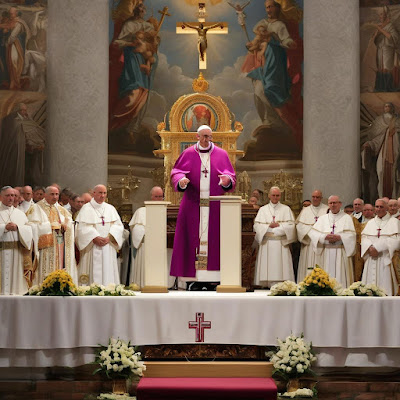


This approach aligns with the teachings of St. Cyprian of Carthage, who emphasized that “the Church is in the bishop and the bishop in the Church,” underscoring the collaborative, not autocratic, nature of ecclesial governance. The Second Vatican Council further affirmed this in Lumen Gentium (LG 22), which teaches that the Pope, while supreme, is bound to act in communion with the other bishops, especially in matters of grave importance.

Moreover, the principle of subsidiarity—a key tenet in Catholic social teaching—ensures that decisions are addressed at the most local level possible. This means that individual archdioceses, dioceses, and parishes exercise a degree of independence and autonomy, entrusting local issues to those directly involved rather than centralizing all power in Rome. Subsidiarity reflects the Church’s respect for the unique needs of each community and further illustrates that the Pope is not an absolute ruler but a unifying leader, facilitating guidance rather than imposing rigid control.

Historically, Popes have acted in consultation with the bishops, especially when defining matters of doctrine. This collaborative approach was evident in Pope Pius IX’s declaration of the Immaculate Conception in 1854 and Pope Pius XII’s proclamation of the Assumption in 1950, both of which were made only after consultation with bishops worldwide. Even Pope John Paul II highlighted this aspect of collegiality in his encyclical Ut Unum Sint (1995), where he reaffirmed the importance of dialogue and unity in decisions affecting the Church.

In this way, the Church’s governance structure, while often described as a “monarchical episcopacy,” in fact includes elements of democracy and lay involvement, with respect for local governance and the contributions of laity, priests, and bishops alike. This balance of hierarchy with communal involvement reaffirms that the Pope’s role is not one of tyranny but of a guiding steward. As St. Augustine once said, “I am a bishop for you; I am a Christian with you.” This ethos remains central to the Church’s leadership, demonstrating that the Pope’s role is fundamentally pastoral, seeking to lead with humility, wisdom, and shared responsibility.


All of these insights helped dismantle the barriers that had once separated me from the Catholic Church, allowing me to let go of deeply ingrained Protestant anti-Catholic beliefs. I had been so influenced by these views that I once saw the Catholic Church as the "Whore of Babylon" and the Pope as the "Antichrist." However, through deeper study of Scripture and the writings of Church Fathers—including St. Augustine, who emphasized that “where the Church is, there also is the Spirit of God” (De Baptismo, 4.16)—I came to see the Church not as an adversary but as the Body of Christ, the One, Holy, Catholic, and Apostolic Church.


The Second Vatican Council’s Lumen Gentium (LG 8) describes the Church as “a sacrament... of communion with God and of unity among all people.” This teaching echoed my growing understanding that the Catholic Church is the divinely established means to salvation, founded by Christ upon Peter’s confession in Matthew 16:18-19 and entrusted with the “keys of the kingdom.” Studying Pope Leo XIII’s encyclical Satis Cognitum (1896), which reaffirms the necessity of unity within the one Church established by Christ, deepened my conviction that the Catholic Church alone possesses the fullness of truth.

Through the teachings of Canon Law (canon 205), which affirms that “full incorporation” in the Catholic Church is essential for true communion with God, I realized that the faith of my ancestors, rooted in the Apostolic succession and doctrines upheld by the Church, is the path to salvation. Influenced by the writings of theologians and historians like John Henry Newman, who famously stated, “To be deep in history is to cease to be Protestant,” I came to recognize the profound truth of Catholicism. I was finally able to embrace the faith I had once rejected, knowing it to be the true and unbroken path to God: the One, Holy, Catholic, and Apostolic Church. I came home to the Catholic Church.


Related: 


Tuesday, October 1, 2024

The Church Hierarchy (The Papacy and Bishops)


The Catechism of the Catholic Church (1992) provides a detailed explanation of the Church’s hierarchical structure, particularly focusing on the roles of the papacy and bishops. This hierarchical organization is presented as divinely instituted, grounded in Christ’s establishment of the apostles as leaders of the Church and perpetuated through apostolic succession. Below is an exploration of the Catechism’s teachings on the Church hierarchy, with an emphasis on the papacy and the episcopacy (bishops).


1. The Foundation of the Church’s Hierarchy

  • The Catechism teaches that Christ Himself instituted the Church’s hierarchy by appointing the apostles as leaders of the early Church. This foundation was intended to ensure the faithful transmission of Christ’s teachings, the proper administration of the sacraments, and the unity of the Church across time and space.
  • Apostolic succession is central to the Church’s structure. It asserts that the authority given to the apostles by Christ has been passed down through an unbroken line of successors—the pope and bishops—who continue to shepherd the Church.

2. The Role of the Papacy

  • The Catechism emphasizes the pope’s unique position as the successor of Saint Peter and the visible head of the universal Church. This role is described as being directly instituted by Christ when He gave Peter the keys to the Kingdom of Heaven (Matthew 16:18-19).
  • The pope is the bishop of Rome and holds "supreme, full, immediate, and universal" authority over the Church. This means his leadership is not limited by geographical or hierarchical constraints and is considered final in matters of faith, morals, and governance.
  • The pope’s responsibilities include:
    • Preserving the unity of the Church.
    • Acting as the principal teacher of faith and morals.
    • Ensuring the faithful transmission of apostolic tradition.
    • Governing the Church through his pastoral authority.
  • When the pope teaches ex cathedra (literally, “from the chair”) on matters of faith and morals, such teachings are considered infallible. This charism of infallibility is a gift of the Holy Spirit, ensuring the Church remains free from error in essential teachings.

3. The Role of Bishops

  • Bishops are the successors of the apostles and hold the fullness of the sacrament of Holy Orders. The Catechism highlights their role as shepherds of their dioceses, responsible for teaching, sanctifying, and governing their local churches in communion with the pope.
  • As part of the episcopal college (the collective body of bishops), bishops share in the responsibility of guiding the Church universally, in union with the pope, who serves as the head of this college.
  • Key responsibilities of bishops include:
    • Teaching: Bishops are tasked with proclaiming the Gospel and ensuring sound doctrine within their dioceses.
    • Sanctifying: Bishops are the primary administrators of the sacraments in their dioceses, particularly Confirmation and Holy Orders.
    • Governing: Bishops oversee the pastoral and administrative needs of their dioceses, including clergy, laity, and Church institutions.
  • The Catechism underscores the collegial nature of the episcopacy, highlighting how bishops act collectively with the pope to address the needs of the universal Church.

4. The Unity Between the Pope and Bishops

  • The Catechism stresses the essential relationship between the pope and the bishops, describing them as working in communion. While the pope holds primacy as the visible head of the Church, bishops have a shared responsibility for the Church’s mission.
  • This relationship is modeled on the unity of the apostles, with Peter as their leader. The pope’s authority ensures doctrinal unity, while bishops exercise authority within their own dioceses, always in union with the pope.
  • The pope convenes councils and synods, where bishops collaborate on matters of faith, morals, and Church governance. These gatherings reflect the collegial nature of the Church’s hierarchy.

5. Apostolic Succession and Sacramental Authority

  • The Catechism emphasizes that bishops, through apostolic succession, maintain an unbroken continuity with the apostles. This connection ensures the Church’s teachings remain faithful to Christ’s original message.
  • Bishops are entrusted with the sacramental life of the Church. They ordain priests and deacons, ensuring that the sacraments are administered properly and that the Church’s apostolic mission continues.

6. The Hierarchy as Servant Leadership

  • The Catechism teaches that the Church’s hierarchy is not a structure of power but one of service. The pope and bishops, following the example of Christ, are called to shepherd the faithful with humility and love.
  • The authority of the pope and bishops is exercised for the sake of the Church’s unity, sanctity, and mission. Their leadership is seen as a ministry of service to the People of God, ensuring the Church remains a visible sign of Christ’s presence in the world.

7. Hierarchical Roles in the Church’s Mission

  • The hierarchy is integral to the Church’s mission of evangelization. The pope and bishops guide the faithful in spreading the Gospel and addressing contemporary challenges in light of Christ’s teachings.
  • They also play a key role in ecumenism (efforts to achieve Christian unity) and interfaith dialogue, working to foster mutual respect and understanding among different faith traditions.

8. The Hierarchy and the Laity

  • While the pope and bishops hold unique roles within the Church, the Catechism emphasizes that the hierarchy exists to serve the entire People of God. The laity are encouraged to participate in the Church’s mission in collaboration with the hierarchy, fulfilling their own call to holiness and apostolate.

Conclusion

The Catechism of the Catholic Church portrays the hierarchy as essential to the Church’s identity and mission. The pope and bishops, as successors to Saint Peter and the apostles, are tasked with preserving the unity, continuity, and authenticity of the Church’s teachings and sacraments. Their authority is presented not as a power structure but as a ministry of service, modeled on Christ’s example of humility and love. By working together in communion, the pope and bishops ensure the Church remains faithful to its mission of sanctifying and uniting the People of God in Christ.

Another perspective:

The Catechism of the Catholic Church (1992) offers a detailed explanation of the Church hierarchy, focusing on the roles of the papacy and the bishops as essential components of the Church’s structure. Here’s what the Catechism teaches about the hierarchical organization and leadership within the Church:


1. The Nature and Purpose of the Church Hierarchy

  • The Catechism teaches that the Church’s hierarchy is rooted in divine institution, established by Christ Himself. Its purpose is to ensure the Church’s unity, guide the faithful in their spiritual journey, and safeguard the deposit of faith.
  • The hierarchy exists to serve the People of God, emphasizing a model of leadership that reflects Christ’s example of humility and service. While it has governing authority, the Church hierarchy is fundamentally oriented toward pastoral care, teaching, and sanctifying the faithful.

2. The Role of the Pope (The Papacy)

  • Supreme Authority: The pope, as the successor of Saint Peter, holds the highest authority in the Church. He serves as the bishop of Rome and the leader of the worldwide Catholic Church. His role is described as the visible source and foundation of unity for all bishops and the faithful.
  • Infallibility: The Catechism reiterates the doctrine of papal infallibility, which applies when the pope, speaking ex cathedra (from the chair of Peter), proclaims a definitive teaching on faith or morals. This charism of infallibility is guided by the Holy Spirit and ensures the Church remains free from error in essential doctrines.
  • Responsibilities: The pope is charged with teaching, sanctifying, and governing the Church. He is a custodian of sacred tradition and scripture, interpreting and defending the faith in the face of new challenges. His role extends to fostering Christian unity and engaging in dialogue with other religions and the world at large.

3. The Role of Bishops

  • Apostolic Succession: Bishops are considered the successors of the apostles, entrusted with preserving the faith and passing on the teachings of Christ. Through the laying on of hands and the sacrament of Holy Orders, bishops receive their authority and mission within the Church.
  • Co-Workers with the Pope: Bishops operate in communion with the pope, forming the episcopal college that governs the Church. While each bishop has authority over their own diocese, their ministry must align with the pope’s leadership to maintain unity within the Church.
  • Threefold Mission:
    • Teaching: Bishops are responsible for preaching the Gospel and teaching the faithful. They serve as the principal teachers in their dioceses and ensure that Church doctrine is faithfully transmitted.
    • Sanctifying: Through the administration of the sacraments, bishops sanctify the Church. They ordain priests and deacons and oversee the sacramental life of their dioceses.
    • Governing: Bishops guide and administer their dioceses, ensuring that Church law and pastoral care are implemented. They are tasked with promoting social justice, supporting the poor, and addressing the spiritual and material needs of their communities.
  • Unity in Diversity: While bishops exercise authority in their dioceses, the Catechism highlights the importance of their collegial relationship with one another and their communion with the pope. This relationship reflects the Church’s unity in diversity.

4. The Episcopal College

  • The Catechism explains that the bishops, collectively, form an episcopal college with the pope as its head. This structure mirrors the unity of the apostles with Peter.
  • Together, the pope and bishops share responsibility for the universal Church. This collegiality is most visibly expressed during ecumenical councils, where bishops from around the world gather under the pope’s leadership to address matters of faith, morals, and Church governance.

5. Deacons and Priests Within the Hierarchy

  • While the focus of the hierarchy is on the pope and bishops, the Catechism also highlights the roles of priests and deacons, who serve as collaborators with bishops in their pastoral mission:
    • Priests: Priests act as co-workers of bishops, assisting in teaching, sanctifying, and governing at the parish level. Through the sacrament of Holy Orders, they share in the bishops’ ministry but operate under the bishop’s authority.
    • Deacons: Deacons are ordained to serve in a role of service, assisting bishops and priests in liturgy, charity, and pastoral care. They do not have the same sacramental authority as priests but play a vital role in the Church’s mission.

6. Unity and Diversity in the Church’s Hierarchy

  • The Catechism emphasizes that the Church’s hierarchical structure is not about domination but about service. Each level of the hierarchy—pope, bishops, priests, and deacons—works together to fulfill the mission of the Church.
  • This unity reflects the Church as the Body of Christ, where different roles and functions contribute to the health and vitality of the whole.

7. The Role of the Hierarchy in the Church’s Mission

  • The hierarchy exists to guide the Church in fulfilling its mission of proclaiming the Gospel, administering the sacraments, and fostering a life of holiness among the faithful.
  • The pope and bishops play a crucial role in addressing modern challenges, ensuring that the Church remains faithful to Christ’s teachings while engaging with contemporary issues.

Conclusion

The Catechism of the Catholic Church presents the hierarchy as a divinely instituted structure that safeguards the Church’s unity, doctrine, and mission. The pope, as the successor of Peter, serves as the highest authority, while bishops, in communion with the pope, ensure that the faith is taught, celebrated, and lived in dioceses worldwide. This hierarchical organization, rooted in apostolic tradition, reflects a balance of authority, service, and collaboration aimed at guiding the Church faithfully in its journey toward salvation. Read the Catechism here.

Tuesday, September 3, 2024

Pope St. Gregory the Great Feast Day September 3rd


 Pope Gregory I, commonly known as Pope St. Gregory the Great, was one of the most influential popes in the history of the Catholic Church. His pontificate lasted from 590 to 604 AD, and his contributions to the Church and Western civilization have left an enduring legacy. Let's explore his life, accomplishments, and significance. His feast day is September 3rd.

Early Life and Monasticism

  • Born: Around 540 AD in Rome, Gregory came from a prominent Roman family with a strong Christian background. His family was wealthy and held high positions in society, which provided Gregory with a robust education.
  • Monastic Life: Before becoming pope, Gregory served as the Prefect of Rome, but he later abandoned public life to become a monk. He founded several monasteries, including his own home, which he converted into a monastery dedicated to St. Andrew. His deep commitment to monasticism shaped his papacy and his approach to church reform and administration.

Papacy and Reforms

  1. Gregorian Chant:

    • Gregory is traditionally credited with the development of what is now known as Gregorian Chant, a form of plainchant used in liturgical music. While his direct role in creating the chant is debated, his name has been associated with this style of sacred music, which became a staple of Western Christian liturgy.
    • Church Fathers: Gregory's emphasis on the liturgy and sacred music reflects the early Church Fathers' teachings on the importance of worship and prayer in the life of the Church.
  2. Pastoral Care and the “Pastoral Rule”:

    • Gregory wrote the Regula Pastoralis (Pastoral Rule), a guide for bishops on how to care for their flock. This text became a standard for bishops throughout the medieval Church, emphasizing humility, dedication, and the importance of personal holiness in leadership.
    • Catechism of the Catholic Church: The importance of pastoral care and the spiritual guidance of the faithful as outlined by Gregory is echoed in the Catechism, which underscores the role of bishops as shepherds of the Church (CCC 1560).
  3. Church Administration:

    • Gregory was a skilled administrator who reformed the Church’s governance, improved the management of Church lands (known as the Patrimony of St. Peter), and ensured that the Church's wealth was used to support the poor and needy.
    • His efforts to strengthen the administrative structure of the Church laid the groundwork for the medieval papacy’s role in European politics and society.

Diplomacy and Relations with Barbarian Kingdoms

  • Mission to the Anglo-Saxons:

    • One of Gregory’s most significant achievements was sending St. Augustine of Canterbury to convert the Anglo-Saxons in England. This mission led to the establishment of Christianity in England and the strengthening of the Roman Church’s influence in Northern Europe.
    • Church Councils: Gregory’s missionary work aligns with the Church's universal mission, as articulated in various Church Councils, to spread the Gospel to all nations (cf. Matthew 28:19-20).
  • Relations with the Lombards:

    • Gregory navigated the complex political landscape of Italy, particularly dealing with the Lombards, a Germanic people who were a constant threat to Rome. He used both diplomacy and financial aid to secure peace and protect the city of Rome.

Theological Contributions

  • Theology and Writings:
    • Gregory’s writings had a profound impact on the development of medieval theology. His Dialogues and Moralia in Job are among his most famous works, exploring the lives of saints, the nature of the soul, and the moral teachings of Scripture.
    • St. Augustine’s Influence: Gregory was heavily influenced by the works of St. Augustine, particularly in his views on grace, predestination, and the role of the Church in salvation. He helped transmit Augustine’s theology to the medieval Church.

Legacy

  1. Title "Servus Servorum Dei":

    • Gregory was the first pope to use the title Servus Servorum Dei ("Servant of the Servants of God"), reflecting his humility and his view of the papal office as one of service to the Church and the faithful.
    • Vatican II: This emphasis on service is a theme that resonates with the teachings of the Second Vatican Council, which called for the Church to be a servant of humanity.
  2. Canonization and Influence:

    • Gregory was canonized as a saint shortly after his death and is one of the four great Doctors of the Latin Church. His feast day is celebrated on September 3rd.
    • His influence extended beyond the Church to Western civilization, where he is regarded as a pivotal figure in shaping the medieval papacy and the broader Christian world.

Conclusion

Pope Gregory the Great’s legacy is vast, encompassing liturgical reforms, theological contributions, missionary work, and effective church governance. His impact on the Church and Western Christianity is immeasurable, and his example of humble, service-oriented leadership continues to inspire the Church today. His feast day or memorial is September 3rd.

Sources:

  • The Catholic Encyclopedia: Detailed entries on Pope Gregory the Great and his contributions.
  • Catechism of the Catholic Church: References to pastoral care and the role of bishops.
  • St. Gregory the Great, Pastoral Rule and Dialogues: Primary sources on Gregory’s teachings and writings.
  • Eamon Duffy, Saints and Sinners: A History of the Popes: A historical overview of Gregory’s papacy.
  • Jaroslav Pelikan, The Christian Tradition: A History of the Development of Doctrine: Insights into Gregory’s theological contributions.

Monday, September 2, 2024

Why I Am a Catholic: The Roman Catholic Church Is the temporal Kingdom of God on Earth


Why I Am a Catholic

I am Catholic because, like the early Christians, I recognize the Roman Catholic Church as the temporal Kingdom of God on Earth—the "Church Militant." This belief is rooted in Jesus' words to Peter: "And I tell you that you are Peter, and on this rock I will build my church, and the gates of Hades will not overcome it" (Matthew 16:18). Despite being a human institution made up of fallible people, the Church is divinely protected from teaching theological error. This protection is assured by the Holy Spirit, as Jesus promised: "But when He, the Spirit of truth, comes, He will guide you into all the truth" (John 16:13).

The early Church Fathers, such as St. Ignatius of Antioch, strongly affirmed the sanctity and divine guidance of the Church. St. Ignatius famously stated, "Wherever the bishop appears, there let the people be; as wherever Jesus Christ is, there is the Catholic Church" (Letter to the Smyrnaeans, 8:2). This unity under the leadership of bishops was seen as essential to the true Church.

While the Church has faced periods of corruption and abuse, it has also been a source of profound holiness, moral guidance, and truth. For every failure, there are countless faithful clergy and billions of followers who live out the true teachings of Christianity. The Church's ability to endure and continue its mission despite human failings is a testament to its divine foundation.

The Catholic Church, together with the Eastern Orthodox Church, is often regarded as more than just a religious institution; it is seen as the manifestation of the Kingdom of God on Earth. In this divine governance, Jesus is the King, reigning from Heaven, with the Pope as His Vicar on Earth, akin to a Prime Minister, and the bishops as His spiritual princes. This understanding is deeply rooted in historical, theological, and scriptural traditions. When Christianity was legalized under Emperor Constantine, early Christians interpreted this momentous event as the realization of the prophecy: "The kingdom of the world has become the kingdom of our Lord and of his Christ, and he will reign forever and ever" (Revelation 11:15). This perspective has profoundly shaped the Church’s identity and mission, affirming its role as both a spiritual and temporal authority, guided by divine will throughout history.

Sources:

  • The Bible: Matthew 16:18, John 16:13, Revelation 11:15
  • Catechism of the Catholic Church, sections 768, 779, 811
  • St. Ignatius of Antioch, Letter to the Smyrnaeans, 8:2
  • Second Vatican Council, Lumen Gentium, Chapter 3
Let's explore this concept further by examining its history and the rationale behind its development:

AI representation of Jesus giving St. Peter the keys to the kingdom

When the early Christian community realized that the anticipated immediate return of Christ was not going to occur within their lifetimes, a significant shift in understanding and practice took place. By the end of the first century AD, the Church recognized the necessity of preserving the teachings of Jesus and the Apostles through written texts and establishing a hierarchical structure to maintain doctrinal integrity and continuity. This realization laid the groundwork for the development of the New Testament canon, the offices of bishops, and the primacy of the Pope, all central to the concept of Apostolic Tradition and Succession.

The Development of the Canon and Church Hierarchy


  1. Scriptural Foundation:

    • The New Testament itself alludes to the necessity of preserving the teachings of Christ. Luke 1:1-4 and John 20:31 speak to the importance of documenting the life and teachings of Jesus. Moreover, 2 Timothy 3:16-17 highlights the role of Scripture in guiding the Church.
    • The Apostles recognized the need to appoint successors to continue their mission, as seen in Acts 1:20-26, where Matthias is chosen to replace Judas. This event foreshadows the practice of Apostolic Succession, where bishops were appointed as the successors to the Apostles.


  2. Apostolic Tradition and Succession:

    • The early Church Fathers, such as St. Irenaeus in his work Against Heresies (Book III, Chapter 3), defended the importance of Apostolic Tradition and Succession. He emphasized that the truth of the Church is preserved through the unbroken line of bishops dating back to the Apostles.
    • The Catechism of the Catholic Church (CCC 77-79) reiterates that Apostolic Tradition, transmitted by the Apostles through their successors, is essential for maintaining the integrity of the faith.
  3. Institutionalization and the Rise of Bishops and the Pope:


    • As the Church grew, the role of bishops became increasingly important in maintaining doctrinal unity and addressing heresies. The Council of Nicaea (325 AD) affirmed the authority of bishops and laid the foundation for the primacy of the Bishop of Rome, later known as the Pope.


    • The establishment of the papacy was seen as a fulfillment of Christ's commission to Peter in Matthew 16:18-19, where Jesus gives Peter the "keys of the kingdom," symbolizing authority over the Church.


The Impact of Constantine and Eschatological Shifts


  1. Constantine’s Influence:

    • The legalization of Christianity by Emperor Constantine in the Edict of Milan (313 AD) and his subsequent favor towards the Church marked a turning point in Christian eschatology. With the Church now enjoying imperial support, the imminent expectation of the Apocalypse and Second Coming gave way to a new understanding of the Church’s role in the world.
    • Constantine's conversion and support for Christianity were seen by some early Christians as a partial fulfillment of the Kingdom of God on Earth, as mentioned in Revelation 11:15: "The kingdom of the world has become the kingdom of our Lord and of his Messiah, and he will reign forever and ever."


  2. The Church as the Temporal Kingdom of God:

    • With this shift in perspective, the Church began to view itself as the temporal manifestation of God’s Kingdom on Earth. Jesus, reigning from heaven, was understood as the King, with the Pope serving as His Vicar (Matthew 16:18-19) and the bishops as spiritual princes guiding the faithful.
    • This view was further solidified by the writings of theologians such as St. Augustine in his seminal work The City of God, where he contrasts the City of God with the City of Man, emphasizing the Church's role in transforming the world according to divine principles.

The Church’s Mission and Eschatological Role

  1. From Preparation for the End to Transformation of the World:

    • Initially, the early Christian community saw itself as preparing for the imminent return of Christ. However, with the realization that the Second Coming might not be immediate, the Church’s mission expanded to include the transformation of society in line with Christian values.
    • The Church Councils, particularly the Council of Nicaea and the later Council of Chalcedon (451 AD), played crucial roles in defining the Church's doctrinal foundations and its role in guiding believers towards salvation and shaping the world in the image of God.
  2. The Role of the Church in Salvation:


    • The Catholic Church sees itself as the guardian of truth, entrusted with the mission of leading souls to salvation through the sacraments, teaching, and the apostolic authority passed down from Christ to the Apostles (CCC 846-848).
    • Objective historians and theologians note that this shift from an imminent eschatological expectation to a more institutionalized role in society was key in the development of the Church’s identity and its enduring influence in the world.

Conclusion

The evolution of the Church from a community anticipating the immediate return of Christ to an institution with a defined hierarchy and mission to transform the world was a complex process shaped by historical, theological, and cultural factors. As the early Christian community came to terms with the delayed Parousia (Second Coming), the need to preserve the teachings of Jesus and the Apostles became paramount, leading to the development of the New Testament canon and the establishment of a hierarchical Church structure.

When Constantine legalized Christianity and favored the Church, it significantly altered the Christian eschatological outlook. The Church began to see itself not just as a community awaiting Christ’s return, but as the earthly manifestation of God’s Kingdom, with a divine mission to guide souls to salvation and to influence the world in accordance with Christian values. This understanding was bolstered by the teachings of the Church Fathers, such as St. Augustine, and was formalized through the decisions of Church Councils.

This shift from an imminent expectation of the end times to a more active, world-transforming role has defined the Catholic Church’s identity for centuries, establishing it as a spiritual and temporal authority that continues to guide millions of believers toward salvation while striving to imprint divine justice and mercy upon the world.

Sources:

  • Holy Bible: Matthew 16:18-19, Acts 1:20-26, 2 Timothy 3:16-17.
  • Catechism of the Catholic Church: Sections 77-79, 846-848.
  • St. Augustine, The City of God.
  • St. Irenaeus, Against Heresies.
  • Council of Nicaea (325 AD): Establishment of Church authority and the primacy of the Bishop of Rome.
  • Edict of Milan (313 AD): Constantine’s legalization of Christianity and its impact on the Church’s eschatological views.

This comprehensive shift in understanding the Church’s role not only solidified its hierarchical structure but also its mission to bring about God’s Kingdom on Earth, as it awaits the fulfillment of God’s plan in the Second Coming of Christ.


Monday, August 26, 2024

"The Word 'Pope" Is Not In the Bible!"


Some critics argue that the word "Pope" is not found in the Bible, using this as a basis to challenge the legitimacy of the papacy. However, this criticism stems from a misunderstanding of the term’s origins and the biblical foundations of the papal office. The title "Pope" is derived from the Greek word papa, meaning "father," a title commonly used for spiritual leaders. St. Paul himself refers to his role as a "spiritual father" in 1 Corinthians 4:15, where he says, "For I became your father in Christ Jesus through the gospel."

Regarding the papal office, the Pope is the Bishop of Rome. While the term "pope" is not explicitly mentioned in Scripture, the Bible does speak of bishops and the Church in Rome. For example, St. Paul’s letter to the Romans shows the early significance of the Roman Christian community (Romans 1:7-8). Given that bishops are a scriptural office (1 Timothy 3:1-7, Titus 1:7), it is logical to deduce that the early Church in Rome had a bishop, who later became known as the Pope. The development of the papacy, as the leadership of the universal Church, is rooted in the biblical role of St. Peter and his successors.

The Church Fathers, such as St. Ignatius of Antioch and St. Irenaeus, recognized the unique authority of the Bishop of Rome, further establishing the papacy as a continuation of the apostolic leadership instituted by Christ.

Sources:

  • Holy Bible: 1 Corinthians 4:15, 1 Timothy 3:1-7, Titus 1:7, Romans 1:7-8.
  • Catechism of the Catholic Church, sections 880-882.
  • St. Ignatius of Antioch, Letter to the Romans.
  • St. Irenaeus, Against Heresies

The Word "Pope" and the Papacy in the Bible


The term “Pope” does not appear in the Bible directly. However, the role and authority of the Pope, understood as the Bishop of Rome and the spiritual leader of the worldwide Church, have their roots in biblical teachings and the early Church's understanding of the apostolic ministry.

The Meaning of "Pope"

The word "Pope" comes from the Latin word papa, which means "father." This title reflects the spiritual fatherhood of the Pope over the Church. The concept of spiritual fatherhood is deeply biblical. For example, St. Paul often referred to himself as a spiritual father to the communities he founded. In 1 Corinthians 4:15, Paul writes, "For though you have countless guides in Christ, you do not have many fathers. For I became your father in Christ Jesus through the gospel."

Biblical Foundations of the Papacy

  1. Peter’s Role in the Church:

    • The papacy is biblically rooted in Jesus’ commission to St. Peter. In Matthew 16:18-19, Jesus says to Peter, "And I tell you, you are Peter, and on this rock I will build my church, and the gates of hell shall not prevail against it. I will give you the keys of the kingdom of heaven, and whatever you bind on earth shall be bound in heaven, and whatever you loose on earth shall be loosed in heaven." This passage establishes Peter as the foundation of the Church, with the authority to govern it.
    • The "keys of the kingdom" symbolize authority, echoing Isaiah 22:22, where the keys to the House of David are given to Eliakim, the steward, symbolizing his authority over the kingdom.


  2. Peter’s Leadership in the Early Church:

    • Peter’s leadership is evident in the early Church, where he is often the spokesperson for the apostles (Acts 2:14-41) and makes authoritative decisions (Acts 15:7-12). The early Church recognized Peter as the leader, a role later conferred on the Bishops of Rome, his successors.
  3. Paul’s Epistle to the Romans:

    • St. Paul’s letter to the Christians in Rome (the Epistle to the Romans) is significant because it indicates the importance of the Roman community. While Paul was writing to a church he did not found, his letter acknowledges the Church’s pivotal role. By the 2nd century, Rome was recognized as the leading Church, partly because of Peter’s martyrdom there and the role of its bishops.

The Development of the Papacy

  1. Church Fathers:

    • The Church Fathers, such as St. Ignatius of Antioch (c. 107 AD), recognized the primacy of the Roman Church. In his letter to the Romans, Ignatius refers to the Church in Rome as "presiding in love." Similarly, St. Irenaeus (c. 180 AD) wrote about the Church in Rome’s “preeminent authority” in his work Against Heresies.
    • Tertullian (c. 200 AD) and other early writers also acknowledged the special role of the Bishop of Rome as the successor of Peter.
  2. Church Councils:


    • The First Council of Nicaea (325 AD) recognized the special authority of the Church of Rome. Although the title “Pope” was not formally used, the Bishop of Rome’s primacy was implicitly acknowledged. The Council of Chalcedon (451 AD) referred to the Pope as having "the primacy of honor."

Conclusion

While the specific word "Pope" is not found in the Bible, the role it represents is deeply rooted in biblical teachings, particularly through the leadership of Peter and the early Christian understanding of apostolic succession. The papacy developed over time, with the Church Fathers and Councils affirming the unique role of the Bishop of Rome as the spiritual leader of the universal Church.


Sources:

  • Holy Bible: Matthew 16:18-19, 1 Corinthians 4:15, Acts 2:14-41, Acts 15:7-12.
  • Catechism of the Catholic Church, sections 880-883.
  • St. Ignatius of Antioch, Letter to the Romans.
  • St. Irenaeus, Against Heresies.
  • First Council of Nicaea (325 AD), Council of Chalcedon (451 AD)

Friday, August 23, 2024

Call No Man "Father"?


I can’t help but feel a mix of amusement and frustration whenever a non-Catholic or anti-Catholic tries to use a so-called "proof text" from the Bible to claim that the Catholic Church is wrong, pagan, or even evil. They’ll point to verses like "call no man father" (Matthew 23:9) and declare, "See? I
t says it right here, 'call no man father' and you call priests father! The Catholic Church is contradicting Jesus and the Scriptures! The Church is wrong! It’s the Antichrist! How do you explain THAT?"

Well, first, let’s remember that the Catholic Church gave us the Bible. Why would the Church authorize a book that supposedly disproves its own teachings? And secondly, the Church has been around for over 2,000 years—do you really think this question has never come up before? Of course, the Church has an answer. There's not one question you can ask or one objection you can bring up that the Catholic Church doesn't have an answer to. And now with Google in the palm of our hands everywhere you go, there's no reason for this ignorance, you can always just look it up. Google it!

So, let’s dive into what the Church actually teaches and explore the context of these biblical passages to understand the fuller picture.

The question of why Catholics call priests "father" often arises from a concern about Jesus' words in Matthew 23:9, where He says, "And call no man your father on earth, for you have one Father, who is in heaven." At first glance, this passage seems to prohibit the use of the title "father" for anyone other than God. However, a deeper understanding of the biblical context, Church Tradition, and the teachings of the Church clarifies why Catholics use this title.

Biblical Context and Interpretation


  1. Context of Matthew 23:9:

    • In Matthew 23:9, Jesus is addressing the Pharisees and their prideful desire for titles and honors that exalted them above others. His warning is against using titles in a manner that elevates one’s status and detracts from the ultimate authority of God the Father.
    • Throughout the Bible, the term "father" is used to describe spiritual and biological relationships. For example, St. Paul refers to himself as a spiritual father when he writes, "For I became your father in Christ Jesus through the gospel" (1 Corinthians 4:15). Paul also refers to "our father Abraham" (Romans 4:12). Clearly, Jesus was not forbidding the use of the term "father" in all contexts, but rather cautioning against the misuse of such titles.
  2. Other Scriptural Examples:

    • The Bible is filled with examples of spiritual fatherhood. In the Old Testament, Elisha refers to Elijah as "my father" (2 Kings 2:12). In the New Testament, St. Stephen refers to the patriarchs as "our fathers" (Acts 7:2), and St. John writes to "fathers" in the faith (1 John 2:13-14).

The Tradition of the Church

  1. Church Fathers:

    • The use of the term "father" for spiritual leaders has been a consistent practice since the early Church. St. Augustine, St. Ambrose, and other Church Fathers were often referred to as "Father" because of their role in guiding and nurturing the faith of their communities.
    • St. Jerome, in his writings, uses the term "father" to address spiritual leaders, emphasizing the role of spiritual paternity that priests and bishops play in the Church.
  2. Catechism of the Catholic Church:

    • The Catechism of the Catholic Church (CCC 1549-1551) explains that the priest, as a spiritual father, acts "in persona Christi" (in the person of Christ) during the sacraments. The title "father" reflects this spiritual fatherhood, which is modeled after God the Father, who is the source of all life and authority.
  3. Church Councils:

    • The tradition of calling priests "father" is also affirmed in the decisions of various Church Councils, which have upheld the role of priests as spiritual leaders and guides in the Christian community. This practice reflects the respect and honor given to those who serve as representatives of Christ on earth.

Addressing Claims of Pagan Origins

The title "father" as used for priests does not derive from paganism. The practice has its roots in both the Old and New Testaments and was adopted by the early Church to express the spiritual fatherhood of priests. Unlike pagan practices, which often involved titles to assert dominance or divinity, the use of "father" in the Christian context emphasizes humility, service, and spiritual guidance.

Conclusion

The Catholic practice of calling priests "father" is deeply rooted in Scripture, Tradition, and the teachings of the Church. Far from being an act of disobedience to Christ’s words in Matthew 23:9, it is a recognition of the spiritual fatherhood that priests exercise in their ministry. The Church, guided by the Holy Spirit, has long upheld this practice as a means of honoring those who shepherd the faithful in the image of Christ, the Good Shepherd.

Sources:

  • Holy Bible: Matthew 23:9, 1 Corinthians 4:15, 1 John 2:13-14, Romans 4:12.
  • Catechism of the Catholic Church, sections 1549-1551.
  • St. Augustine, Confessions.
  • St. Jerome, Letters.
  • Second Vatican Council, Lumen Gentium