Showing posts with label bishop. Show all posts

Sunday, October 11, 2026

News: Pope Leo XIV to Undergo Lung Surgery: A Moment of Concern, Faith, and Prayer for the Holy Father


Pope Leo XIV to Undergo Lung Surgery: A Moment of Concern, Faith, and Prayer for the Holy Father

By Chris M. Forte | October 11, 2026

The Catholic world is being called to prayer following the announcement that Pope Leo XIV will undergo surgery to remove a small nodule discovered in his lung. While the Vatican has expressed cautious optimism, the news offers a reminder that even the successor of St. Peter shares in the frailty and uncertainty of the human condition.

The Pope Announces His Upcoming Surgery

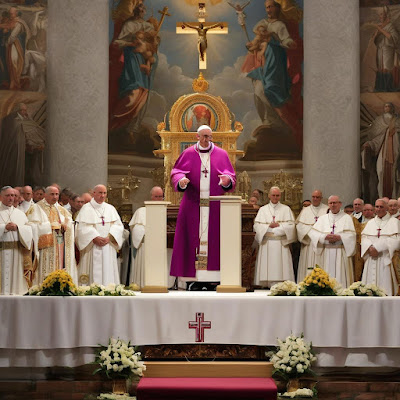
On Sunday, October 11, 2026, Pope Leo XIV delivered unexpected news to the faithful gathered in St. Peter's Square during his customary Sunday Angelus address.

The 71-year-old pontiff announced that recent medical examinations had revealed a small, localized nodule in one of his lungs. Following the recommendations of his physicians, he has decided to undergo surgery to have it removed.

According to Vatican News, the abnormality was detected early and appears to be confined to a particular area of the lung.

The Pope spoke openly about his condition, explaining that he had accepted his physicians' advice and was preparing for the procedure in the coming days.

He concluded his announcement by thanking the faithful for their spiritual support and asking them to remember him in their prayers.

The Holy See has indicated that the surgery is expected to take place early this week at Rome's Agostino Gemelli Polyclinic, a hospital long associated with the medical care of the papacy.

Vatican spokesman Matteo Bruni indicated that the Pope's anticipated postoperative hospitalization would last approximately one week.

Vatican News
+2

What Do We Know About His Condition?

For Catholics concerned about the Holy Father's health, it is important to distinguish confirmed information from speculation.

A pulmonary nodule is a small area of abnormal tissue in the lung. Such nodules may develop for several reasons, including previous infections, inflammation, benign growths, or, in some cases, cancer.

However, the discovery of a lung nodule does not automatically mean that a person has cancer.

At present, the Vatican has not publicly identified the nature of the Pope's nodule or disclosed whether it is malignant.

What we do know is that it was discovered early, that doctors have recommended surgical removal, and that the Holy Father has agreed to the procedure.

These are reasons for measured optimism, not grounds for either panic or premature conclusions.

Pope Leo has generally enjoyed good health since his election in May 2025. He has maintained an active schedule, including public audiences, liturgical celebrations, meetings with world leaders, and pastoral responsibilities.

The announcement represents the first significant publicly disclosed health concern of his pontificate.

Reuters
+2

A Pope Is Still a Man

News of a pontiff facing a medical procedure inevitably reminds us of something that can be easy to forget amid the grandeur and solemnity surrounding the papal office.

The Pope is not superhuman.

He is not immune to illness, suffering, exhaustion, or death. He occupies one of the most significant offices in Christianity, yet remains a mortal man in need of the same medical attention, human compassion, and divine grace as anyone else.

Catholic teaching recognizes the Pope as the successor of St. Peter, the Bishop of Rome, and the visible principle of unity within the Catholic Church.

But the special authority entrusted to the papacy does not make its occupant physically invulnerable.

Indeed, the history of the Church is filled with popes who suffered from disease, disability, physical weakness, and the consequences of advancing age.

St. John Paul II's struggle with Parkinson's disease became one of the defining images of his later pontificate. Pope Francis likewise endured serious medical difficulties, including respiratory problems and lengthy hospitalizations.

Their suffering did not erase the dignity of their office. Rather, it reminded the world that Christian leadership is not merely about exercising authority. It is also about humility, sacrifice, perseverance, and dependence upon God.

Pope Leo XIV now faces his own moment of physical vulnerability.

For believers, this should inspire compassion rather than speculation.

Catholics Have a Biblical Duty to Pray for Their Shepherds

One of the most important responses Catholics can offer during this period is prayer.

Scripture repeatedly encourages Christians to pray for those entrusted with positions of responsibility.

In his First Letter to Timothy, St. Paul writes:

"I urge that supplications, prayers, intercessions, and thanksgivings be made for all men, for kings and all who are in high positions." — 1 Timothy 2:1–2, RSV-CE

Although the passage addresses prayer for those in authority broadly, its underlying principle certainly applies to the Church's spiritual shepherds.

There is also a particularly meaningful biblical precedent concerning St. Peter himself.

In Acts 12:5, when Peter was imprisoned, Scripture tells us:

"So Peter was kept in prison; but earnest prayer for him was made to God by the church." — Acts 12:5, RSV-CE

The early Christian community did not remain indifferent when its apostolic leader faced danger.

It prayed.

Nearly two thousand years later, Catholics throughout the world have an opportunity to demonstrate that same solidarity with the successor of Peter.

We need not agree with every prudential judgment, administrative decision, or personal opinion expressed by a particular pope to recognize our Christian obligation to pray for him.

Our prayers should transcend ideological divisions, ecclesiastical controversies, and personal preferences.

The Pope is our spiritual father, and a father facing illness deserves the prayers of his family.

The Universal Church Responds in Prayer

Following the Pope's announcement, expressions of concern, solidarity, and prayer began arriving from Catholic leaders throughout the world.

Archbishop Paul S. Coakley, president of the United States Conference of Catholic Bishops, encouraged Catholics and people of goodwill to pray not only for Pope Leo but also for the medical professionals responsible for his treatment.

Bishops in Peru, Argentina, Uruguay, Italy, and elsewhere likewise offered prayers for the Holy Father's recovery.

The Peruvian bishops emphasized the Pope's courage and humility in publicly discussing his condition, while other Church leaders expressed their hope that he would soon return to his pastoral responsibilities.

The response demonstrates something beautiful about the universal Church: its members may be separated by national boundaries, languages, cultures, and political differences, yet they remain spiritually united through their communion with the successor of Peter.

Vatican News
+1

What About the Pope's Upcoming Apostolic Journey?

The Pope's surgery also raises understandable questions about his upcoming international travel.

Pope Leo XIV is scheduled to undertake an apostolic journey to Uruguay, Argentina, and Peru from November 6 through November 17, 2026.

The visit is particularly meaningful because of his longstanding personal and pastoral ties to Peru, where he previously served as a missionary and bishop.

As of October 11, the Vatican has announced no changes to the itinerary.

However, the Holy Father's ability to fulfill his engagements will naturally depend upon the outcome of the operation and the advice of his physicians.

For now, the faithful should avoid speculation and await official announcements from the Holy See.

USCCB
+1

Faith and Medicine Are Not Enemies

There is another important lesson in the Holy Father's decision to undergo surgery.

Catholicism has never taught that genuine faith requires believers to reject legitimate medical treatment.

On the contrary, the Church has long recognized the value of medicine, the dignity of medical professionals, and the moral responsibility to care for our physical well-being.

The Book of Sirach expresses this beautifully:

"Honor the physician with the honor due him, according to your need of him, for the Lord created him." — Sirach 38:1, RSV-CE

The same biblical chapter recognizes that physicians exercise their knowledge and skill within God's creation.

The Catechism of the Catholic Church likewise affirms that life and physical health are precious gifts entrusted to us by God (CCC 2288).

We should neither assume that medical treatment makes prayer unnecessary nor imagine that prayer replaces responsible medical care.

Both have their place.

The doctors and surgeons who will treat Pope Leo possess knowledge and skills developed through years of scientific study, professional training, and human experience.

Catholics can reasonably thank God for those gifts while asking Him to guide the hands of the physicians and grant the Pope a successful recovery.

Indeed, Pope Leo's willingness to follow medical advice provides a practical example of the compatibility between faith and reason.

A Personal Reflection: Our Holy Father Needs Our Prayers

As a Catholic, I believe moments like this call us to remember what truly unites us as members of Christ's Church.

We live in an age when Catholics themselves sometimes seem divided into rival factions, debating personalities, theological controversies, liturgical preferences, and the policies of individual pontiffs.

Those discussions may have their proper place. Faithful Catholics can respectfully question prudential decisions without abandoning their loyalty to the Church.

But when the Pope faces a medical crisis, the first response should not be ideological.

It should be Christian.

For me, it is a simple matter of charity.

Pope Leo XIV is not merely an international religious figure or the head of a historic institution. He is the Bishop of Rome, the successor of St. Peter, and a fellow Christian who now faces the uncertainties that accompany surgery.

He needs our prayers just as any of us would.

And I would hope that Catholics who disagree with him on particular matters could set aside those disagreements long enough to pray sincerely for his health and well-being.

After all, we are a spiritual family.

Families can have disagreements. Families can endure tensions. But when a member of the family suffers, love should prevail.

The papacy has survived persecution, wars, political upheaval, scandal, disease, and the deaths of countless pontiffs throughout its long history.

Our confidence ultimately rests not in the physical strength of any particular pope but in Jesus Christ, who promised that the gates of Hades would not prevail against His Church (Matthew 16:18).

That promise, however, does not excuse us from showing compassion toward the man entrusted with shepherding Christ's flock.

A Prayer for Pope Leo XIV

Heavenly Father,

We humbly come before You today, asking Your mercy and protection upon our Holy Father, Pope Leo XIV.

As he prepares to undergo surgery, grant him courage, peace, and confidence in Your loving providence.

Guide the hands of his surgeons, enlighten the minds of his physicians, and bless all those entrusted with his medical care.

Protect him from complications, relieve his anxiety, and grant him a complete and speedy recovery.

Through the intercession of the Blessed Virgin Mary, Mother of the Church, and Saints Peter and Paul, watch over the successor of St. Peter.

May he be strengthened in body and spirit, so that he may continue to shepherd Your people with wisdom, humility, and fidelity to the Gospel.

We ask this through Christ our Lord.

Amen.

Final Thoughts

At the time of this writing, the Holy Father is preparing for surgery, and there is reason to hope for a favorable outcome.

Nevertheless, until the operation has been completed and the results are known, it would be irresponsible to make predictions about his medical condition.

For the faithful, our responsibility is straightforward: remain informed, reject unfounded rumors, respect the Pope's dignity and privacy, and pray for his recovery.

The Church has endured for nearly two thousand years, not because its shepherds were immune to human weakness, but because its ultimate shepherd is Jesus Christ.

Today, as Pope Leo XIV prepares to place himself in the care of his physicians, Catholics throughout the world can unite in a simple and ancient expression of love for the successor of Peter:

Oremus pro Pontifice nostro Leone.

Let us pray for our Pontiff, Leo.

Sources and further reading

This article is an original composition by Chris M. Forte for My Catholic Defense. Its news reporting is based on the following sources published October 11, 2026; its biblical reflections and commentary are original.

Tuesday, August 4, 2026

What Does the Catholic Church Teach About the Pope and the Bishops?


What Does the Catholic Church Teach About the Pope and the Bishops?

One of the most visible differences between Catholicism and many forms of Protestant Christianity is the Catholic Church’s hierarchical structure. Catholics believe that Christ did not leave behind a loose association of independent congregations. He established an apostolic Church with shepherds who would teach, sanctify, and govern His people.

At the heart of that structure are the bishops, successors of the Apostles, and the Bishop of Rome—the Pope—successor of St. Peter.

This does not mean that Catholics believe bishops are perfect, sinless, or incapable of making bad decisions. Rather, the Catholic claim is that their office belongs to the structure Christ established for His Church.

Christ Established an Apostolic Leadership

Jesus deliberately chose the Twelve Apostles and gave them real authority:

“As the Father has sent me, even so I send you.”
— John 20:21

He told them:

“He who hears you hears me.”
— Luke 10:16

And He gave them authority to bind and loose:

“Whatever you bind on earth shall be bound in heaven.”
— Matthew 18:18

Yet within the Twelve, Peter receives a unique commission. Jesus tells him:

“You are Peter, and on this rock I will build my church.”
— Matthew 16:18

Peter receives the keys of the kingdom in Matthew 16:19, is commanded to strengthen his brethren in Luke 22:32, and is personally told by the risen Christ:

“Feed my sheep.”
— John 21:17

Catholicism therefore sees two realities working together: Peter and the Apostles, followed by the Pope and the bishops.

The Catechism: The Pope and Bishops Continue the Apostolic Ministry

The Catechism of the Catholic Church explains:

“The Roman Pontiff, the successor of Peter, and the bishops, the successors of the apostles, are united to one another.”

— Catechism of the Catholic Church, §880
Read the Catechism at the Vatican

The Catechism continues that Peter’s pastoral office and that of the Apostles remain foundational to the Church and are continued by the bishops under the Pope’s primacy.

Regarding the Pope specifically, the Catechism teaches that the Bishop of Rome is:

“the perpetual and visible principle and foundation of unity.”

— CCC §882

The Pope therefore is not simply the honorary chairman of a worldwide federation of churches. Catholic doctrine holds that the office entrusted uniquely to Peter continues in Peter’s successor, the Bishop of Rome.

Canon Law summarizes the doctrine by calling the Pope the “head of the college of bishops, the Vicar of Christ, and the pastor of the universal Church.”

Read Canon 331 at the Vatican

But Bishops Are Not Merely Papal Employees

Catholic teaching is sometimes caricatured as though the Pope possesses all authority while bishops merely carry out orders from Rome.

That is not Catholic doctrine.

Vatican II teaches that:

“The Roman Pontiff, Peter’s successor, and the bishops, the successors of the apostles, are joined together.”

— Lumen Gentium 22

Read Lumen Gentium

Every validly consecrated bishop possesses the fullness of the sacrament of Holy Orders. Bishops teach, sanctify, and govern the particular churches entrusted to them.

Vatican II describes the diocesan bishop as:

“the visible principle and foundation of unity”

in his particular Church.

The Pope, meanwhile, is the visible principle of unity of the bishops and the whole Church.

The structure is therefore not Pope versus bishops. It is Pope with bishops, just as the New Testament presents Peter with the Apostles.

The College of Bishops

The bishops together form what the Church calls the College of Bishops.

The Catechism explains that this college does not act independently of the Pope. Rather, the episcopal college possesses authority with its head, the Roman Pontiff.

Vatican II makes the same point:

“A council is never ecumenical unless it is confirmed or at least accepted” by Peter’s successor.

— Lumen Gentium 22

This gives Catholic ecclesiology both a local and a universal dimension.

A bishop truly governs his own diocese as a successor of the Apostles. At the same time, he remains in communion with the other bishops and with the successor of Peter.

This Structure Appears Very Early in Christianity

The hierarchy of bishops is not a medieval Catholic invention.

Around the beginning of the second century, St. Ignatius of Antioch, a bishop and martyr who lived very close to the apostolic era, wrote:

“Wherever the bishop shall appear, there let the multitude also be.”

He then added:

“Wherever Jesus Christ is, there is the Catholic Church.”

— St. Ignatius, Letter to the Smyrnaeans, 8
Read Ignatius

That is remarkable evidence of an already-recognizable episcopal Church extremely early in Christian history.

About A.D. 180, St. Irenaeus of Lyons appealed to the succession of bishops as evidence against heretical movements. He wrote that Christians could identify those:

“who were by the apostles instituted bishops in the Churches”

and trace their succession.

He then pointed especially to the Church of Rome and its succession of bishops.

— St. Irenaeus, Against Heresies III.3
Read Irenaeus

Whatever later theological debates arose concerning the precise exercise of papal authority, the underlying Catholic ideas of bishops, succession, visible communion, and Roman primacy did not suddenly appear in the Middle Ages.

Vatican I: Papal Primacy Does Not Destroy Episcopal Authority

The First Vatican Council strongly defined papal primacy, but it also explicitly rejected the idea that papal authority makes bishops irrelevant.

Pastor Aeternus teaches that the Pope possesses universal pastoral authority, while also insisting that this authority does not undermine:

“that ordinary and immediate episcopal jurisdiction”

by which bishops shepherd their own flocks.

Read Pastor Aeternus

Vatican II later presented these truths together even more clearly: the primacy of Peter’s successor and the apostolic authority of the bishops belong to the same ecclesial structure.

The Pope Is Not an Absolute Monarch

Catholic teaching should also not be confused with the idea that the Pope can simply invent doctrines whenever he wants.

The Congregation for the Doctrine of the Faith explained:

“The Roman Pontiff—like all the faithful—is subject to the Word of God.”

His mission is not to create a new revelation but to protect and faithfully transmit the apostolic faith.

Read The Primacy of the Successor of Peter in the Mystery of the Church

The hierarchy exists to serve revelation, not replace it.

The Catholic Picture

The Catholic understanding can therefore be summarized very simply:

Christ is the supreme Head of the Church.

Under Christ, Peter was given a unique pastoral responsibility among the Apostles.

The ministry of Peter continues in the Bishop of Rome, the Pope.

The ministry of the Apostles continues through the bishops by apostolic succession.

The bishops govern their particular churches while remaining united with one another and with Peter’s successor.

As Vatican II beautifully states:

“All of them together and with the Pope represent the entire Church in the bond of peace, love and unity.”

— Lumen Gentium 23

That is the Catholic hierarchy—not a man-made corporate ladder, but a visible communion of shepherds intended to preserve the apostolic faith, sacraments, and unity of Christ’s Church from one generation to the next.

Sources

Is the Catholic Hierarchy Biblical?


Catholics are sometimes told that the hierarchy of pope, bishops, priests, and deacons is a later invention—that the New Testament supposedly presents Christianity as a loose collection of independent believers with no visible governing structure.

But when we actually read the New Testament, something very different appears.

We find apostles with real authority, Peter exercising a distinctive role among them, ministers being appointed to continue the apostolic mission, local churches governed by ordained leaders, and doctrinal disputes being settled through a council of Church authorities.

The fully developed terminology of later centuries is not found on every page of Scripture. But the basic structure of Catholic hierarchy is unmistakably biblical.

Jesus Did Not Establish a Leaderless Church

Christ personally chose the Twelve Apostles and gave them authority to teach and govern.

He told them:

“He who hears you hears me, and he who rejects you rejects me.”
— Luke 10:16

After His Resurrection, Jesus commissioned them:

“As the Father has sent me, so I send you.”
— John 20:21

This is not merely a command to preach as private individuals. Christ sends them with authority derived from His own mission.

That apostolic authority is also expressed in Christ's promise concerning binding and loosing:

“Whatever you bind on earth shall be bound in heaven.”
— Matthew 18:18

Christianity therefore begins not with autonomous congregations but with Christ commissioning an identifiable body of apostolic leaders.

Peter Has a Unique Position

Catholics do not believe Peter replaces the other Apostles. Rather, Peter has a special role within the apostolic college.

Jesus says directly to Simon:

“You are Peter, and upon this rock I will build my church.”

He then promises:

“I will give you the keys to the kingdom of heaven.”
— Matthew 16:18–19

The USCCB's biblical commentary notes that Matthew presents the Church as being built upon Peter and associates the power of binding and loosing with genuine teaching authority.

This language also recalls Isaiah 22:20–22, where the steward of the Davidic kingdom receives the key of the royal house and exercises authority under the king.

Christ is the King. Peter serves the King.

That is much closer to the Catholic concept of the papacy than to the idea that Peter was merely one Christian among many with no continuing ecclesial significance.

Peter's distinctive commission appears elsewhere as well.

Jesus tells Peter:

“I have prayed that your own faith may not fail; and once you have turned back, you must strengthen your brothers.”
— Luke 22:32

And after the Resurrection Christ tells him three times:

“Feed my sheep.”
— John 21:17

The Vatican's Congregation for the Doctrine of the Faith summarizes the biblical picture: Peter is the rock, the one commissioned to strengthen his brethren, and the shepherd charged with tending Christ's flock.

But Authority Was Also Given to the Apostles Together

Catholic ecclesiology is not Peter instead of the Apostles.

It is Peter with the Apostles.

Matthew 18:18 gives the authority of binding and loosing to the apostolic body, while Matthew 16 gives Peter a particular role involving the keys.

That distinction is reflected in Catholic teaching today.

The Second Vatican Council explains:

“Just as in the Gospel, the Lord so disposing, St. Peter and the other apostles constitute one apostolic college, so in a similar way the Roman Pontiff, the successor of Peter, and the bishops, the successors of the apostles, are joined together.”

— Lumen Gentium 22

Read Lumen Gentium

That is the Catholic hierarchy in one sentence:

Peter and the Apostles → Pope and bishops.

Does the Bible Teach Apostolic Succession?

The word apostolic succession does not need to appear as a technical phrase for the reality to be present.

Acts 1 gives us an extraordinary example.

After Judas dies, Peter does not say, “There were twelve Apostles, now there are eleven, and eventually they will all disappear.”

Instead he quotes Scripture:

“May another take his office.”
— Acts 1:20

Matthias is then selected:

“to take the place in this apostolic ministry”

and is numbered with the Eleven.

Notice the principle.

An apostle dies.

His office remains.

Another person succeeds him.

That is succession.

The exact ministry of the Twelve was unique because they were witnesses of Christ's earthly ministry and Resurrection. But the New Testament clearly demonstrates that ecclesial offices can continue through successors.

Paul Passes Ministry to Others

We see the same pattern in Paul's pastoral ministry.

Paul reminds Timothy:

“Stir into flame the gift of God that you have through the imposition of my hands.”
— 2 Timothy 1:6

Timothy is then instructed:

“What you heard from me through many witnesses entrust to faithful people who will have the ability to teach others as well.”
— 2 Timothy 2:2

There are effectively several generations here:

Paul → Timothy → faithful ministers → others.

That is remarkably close to what Catholics mean when speaking of the transmission of apostolic ministry.

The New Testament Has Bishops

The English word bishop comes from the Greek episkopos, meaning an overseer.

Paul explicitly speaks of bishops.

Titus is instructed:

“Appoint presbyters in every town.”

Paul immediately goes on to describe the qualifications of:

“a bishop as God's steward.”
— Titus 1:5–7

The USCCB notes that at this early stage the terms presbyteros and episkopos could overlap in usage.

That does not disprove Catholic hierarchy. It simply shows that ecclesiastical terminology was still developing.

The important point is that there were already recognized offices, qualifications for officeholders, appointment to ministry, authority to teach, and responsibility to guard doctrine.

Paul even says that the bishop must hold firmly to the true teaching so that:

“he will be able both to exhort with sound doctrine and to refute opponents.”
— Titus 1:9

This hardly resembles a Christianity in which everyone possesses identical governing and teaching authority.

We Also Find Presbyters and Deacons

Acts describes presbyters—elders—being appointed in local churches.

Paul and Barnabas:

“appointed presbyters for them in each church.”
— Acts 14:23

The Greek presbyteros eventually gives us the English word priest through linguistic development.

The New Testament also explicitly recognizes deacons.

Paul addresses:

“all the holy ones in Christ Jesus who are in Philippi, with the overseers and ministers”

— Philippians 1:1

And 1 Timothy 3 gives qualifications for both bishops and deacons.

So already in the apostolic Church we see distinct ministries that develop into the familiar threefold ordained structure:

bishops — priests/presbyters — deacons.

Acts 15 Looks Remarkably Catholic

One of the strongest biblical examples of Church hierarchy is the Council of Jerusalem in Acts 15.

A major theological dispute erupts:

Must Gentile converts be circumcised and observe the Mosaic Law?

The Christians do not simply say:

“Everyone read the Bible and decide for yourself.”

The matter is brought before:

“the apostles and presbyters.”

A council is held.

Peter speaks authoritatively regarding God's acceptance of the Gentiles.

Paul and Barnabas give testimony.

James delivers a pastoral judgment concerning implementation.

Then the Church sends an official decision to the local churches.

Most strikingly, the council declares:

“It is the decision of the Holy Spirit and of us…”
— Acts 15:28

That sounds remarkably like the Catholic understanding of a council exercising teaching authority under the guidance of the Holy Spirit.

There is debate.

There is deliberation.

There are apostles and presbyters.

There is a decision.

And the decision is sent to other Christians with the expectation that it will be obeyed.

That is visible ecclesiastical authority.

Authority Does Not Mean Sinlessness

None of this means Church leaders are automatically holy.

Peter sinned.

Peter denied Christ.

Paul rebuked Peter's conduct at Antioch in Galatians 2.

Judas betrayed Christ despite holding apostolic office.

Catholicism does not teach that holding ecclesiastical office makes someone morally perfect.

The biblical distinction is important:

personal holiness and ecclesial office are not the same thing.

The validity of Christ's Church does not depend upon every bishop being virtuous any more than the legitimacy of the apostolic college depended upon Judas being virtuous.

What Happened After the Apostles?

Here history becomes especially important.

If the Catholic hierarchical structure were a much later corruption, we should expect the earliest post-apostolic Christians to look radically different.

They do not.

Around the beginning of the second century, St. Ignatius of Antioch repeatedly speaks of the bishop, presbyters, and deacons.

He writes:

“See that you all follow the bishop.”

And famously:

“Wherever Jesus Christ is, there is the Catholic Church.”

— Letter to the Smyrnaeans 8

Read St. Ignatius

Ignatius was writing only a generation or so after the Apostles.

By around A.D. 180, St. Irenaeus of Lyons explicitly appeals to the succession of bishops from the Apostles as evidence against heretics.

He speaks of:

“those who were by the apostles instituted bishops in the Churches”

and says Christians can trace their succession.

Read St. Irenaeus, Against Heresies III.3

He then gives special attention to the succession of bishops in Rome.

This is extraordinarily difficult to explain if hierarchical Christianity supposedly emerged centuries later.

Vatican II Simply Articulates the Biblical Pattern

Vatican II did not invent this theology.

It summarized the biblical and historical tradition:

“Christ the Lord instituted in His Church a variety of ministries.”

It teaches that Christ sent the Apostles and intended:

“that their successors, namely the bishops, should be shepherds in His Church even to the consummation of the world.”

— Lumen Gentium 18

It further teaches:

“bishops by divine institution have succeeded to the place of the apostles.”

— Lumen Gentium 20

The Vatican's Directory for the Pastoral Ministry of Bishops likewise describes bishops as successors of the Apostles who receive responsibility for teaching, sanctifying, and governing in communion with Peter's successor and the other bishops.

Read Apostolorum Successores

So Is the Catholic Hierarchy Biblical?

Yes.

Does the New Testament contain a modern Vatican organizational chart?

Of course not.

The Church was still in its apostolic infancy.

But all the essential elements are there:

  • Christ establishes a visible Church.
  • Christ appoints Apostles with authority.
  • Peter receives a distinctive pastoral office.
  • The Apostles exercise authority collectively.
  • A vacant apostolic office is filled by a successor.
  • Apostolic ministry is handed on through ordained men.
  • Bishops/overseers govern and safeguard doctrine.
  • Presbyters lead local Christian communities.
  • Deacons exercise an ordained ministry of service.
  • Church councils settle doctrinal controversies.
  • Believers are expected to obey legitimate Church leadership.

And immediately after the New Testament period, Christians are already speaking clearly about bishops, presbyters, deacons, apostolic succession, the Catholic Church, and communion with Rome.

The Catholic hierarchy therefore does not fall out of the sky in the fourth century, the Middle Ages, or during the papacy of Gregory the Great.

Its roots are planted directly in the New Testament Church.

Christ remains the supreme Head of the Church.

But He chose to govern His earthly flock through visible shepherds.

The Catholic claim is simply that the structure Christ gave His Church did not vanish when the Apostles died.

It continued.

And that continuing apostolic ministry is what Catholics today call the papacy and the episcopate.

Sources and Further Reading

Scripture

Matthew 16 — USCCB

Acts 1 — The Succession of Matthias

Acts 15 — The Council of Jerusalem

Titus 1 — Bishops and Presbyters

Catholic Documents

Lumen Gentium — Second Vatican Council

The Primacy of the Successor of Peter in the Mystery of the Church

Apostolorum Successores — Directory for the Pastoral Ministry of Bishops

Early Christianity

St. Ignatius of Antioch — Letter to the Smyrnaeans

St. Irenaeus of Lyons — Against Heresies, III.3

Wednesday, January 1, 2025

Apostolic Succession


The Catholic Church’s Teaching on Apostolic Succession

Apostolic Succession is one of the most essential doctrines of the Catholic Church, ensuring that the authority given by Christ to His apostles has been handed down through their successors, the bishops. This unbroken transmission of spiritual authority safeguards the integrity of Christian teaching and preserves the mission entrusted by Christ to the apostles.

1. The Biblical Foundation for Apostolic Succession

Apostolic Succession is deeply rooted in Sacred Scripture. Christ Himself established a hierarchical structure in the Church, giving authority to the apostles and commanding them to continue His mission:

  • Matthew 16:18-19 – Jesus declares to Peter:

    "You are Peter, and on this rock I will build my Church, and the gates of hell shall not prevail against it. I will give you the keys of the kingdom of heaven, and whatever you bind on earth shall be bound in heaven, and whatever you loose on earth shall be loosed in heaven."

    Here, Christ explicitly entrusts Peter with leadership, a responsibility passed down through his successors, the bishops of Rome (the popes).

  • Matthew 28:19-20 – Jesus commissions His apostles:

    "Go therefore and make disciples of all nations, baptizing them in the name of the Father and of the Son and of the Holy Spirit, teaching them to observe all that I have commanded you; and behold, I am with you always, to the end of the age."

    The phrase "to the end of the age" implies that this mission extends beyond the apostles' lifetime and requires successors to carry it forward.

  • Acts 1:20-26 – The selection of Matthias to replace Judas Iscariot demonstrates the apostolic office as a continuing institution:

    "Let another take his office" (Acts 1:20).
    "So they proposed two men... Then they cast lots, and the lot fell to Matthias; so he was added to the eleven apostles" (Acts 1:23-26).

    This passage shows that apostolic authority was meant to be passed on, not end with the original apostles.

  • 2 Timothy 2:2 – St. Paul instructs Timothy:

    "What you have heard from me before many witnesses entrust to faithful men who will be able to teach others also."

    This verse supports the concept of an ongoing transmission of apostolic teaching through appointed leaders.

2. The Church Fathers on Apostolic Succession

The earliest Christian writers, many of whom were direct disciples of the apostles, affirmed and defended apostolic succession as necessary for preserving the true faith.

  • St. Clement of Rome (c. 96 AD) – The fourth pope, writing in his Letter to the Corinthians, states:

    "The apostles have preached the Gospel to us from the Lord Jesus Christ; Jesus Christ has been sent from God. Christ therefore was sent by God, and the apostles by Christ. … They appointed their first fruits—after testing them by the Spirit—to be bishops and deacons of those who would believe" (1 Clement, 42:1-4).

    This demonstrates that the apostles deliberately appointed bishops as their successors.

  • St. Ignatius of Antioch (c. 110 AD) – A disciple of St. John, he wrote extensively about the role of bishops:

    "See that you all follow the bishop, even as Jesus Christ does the Father, and the presbytery as you would the apostles" (Letter to the Smyrnaeans, 8:1).

    Ignatius emphasizes that bishops serve as successors to the apostles and must be obeyed to remain in unity with the Church.

  • St. Irenaeus of Lyons (c. 180 AD) – Writing against heresies, Irenaeus provides one of the most explicit statements on apostolic succession:

    "It is possible, then, for everyone in every Church, who may wish to know the truth, to contemplate the tradition of the apostles which has been made known to us throughout the whole world. And we are in a position to enumerate those who were instituted bishops by the apostles, and their successors down to our own times" (Against Heresies, 3.3.1).

    He specifically traces the lineage of the bishops of Rome from Peter down to his own time, demonstrating the unbroken line of succession.

3. Apostolic Succession in Church Councils and Doctrine

The Ecumenical Councils of the Church consistently reaffirm apostolic succession:

  • The Council of Nicaea (325 AD) declared:

    "Let the ancient customs in Egypt, Libya, and Pentapolis prevail, that the Bishop of Alexandria has authority over all these provinces, since the like is customary for the Bishop of Rome" (Canon 6).

    This confirms that certain sees (Rome, Alexandria, and Antioch) hold a recognized apostolic lineage.

  • The Council of Trent (1545–1563) reaffirmed that ordination through apostolic succession is essential for the validity of sacraments:

    "If anyone says that bishops... are not superior to priests, or that they do not have the power to confirm and ordain... let him be anathema" (Session 23, Canon 6).

  • The Second Vatican Council (1962–1965) stated:

    "The apostles then passed on this spiritual gift to their helpers by the imposition of hands, which has been transmitted down to us in episcopal consecration" (Lumen Gentium, 21).

4. The Catechism of the Catholic Church on Apostolic Succession

The Catechism of the Catholic Church teaches that apostolic succession is necessary to maintain the unity and authority of the Church:

  • CCC 77:

    "In order that the full and living Gospel might always be preserved in the Church, the apostles left bishops as their successors. They gave them their own position of teaching authority."

  • CCC 861-862:

    "The apostolic preaching, which is expressed in a special way in the inspired books, was to be preserved in a continuous line of succession until the end of time."

This affirms that apostolic succession is not merely historical but essential for preserving the truth of the Gospel.

5. Modern Papal Teachings on Apostolic Succession

  • Pope Leo XIII (1896) in Apostolicae Curae:

    "In the Church, there has been from the beginning, and still is, a perpetual succession of bishops."

  • Pope Benedict XVI (2005):

    "The apostolic succession is the guarantee of the permanence of Christ’s Church" (General Audience, May 10, 2006).

6. Conclusion: Why Apostolic Succession Matters

Apostolic succession is not merely a historical tradition but the means by which the Church safeguards its teachings, preserves unity, and ensures continuity with Christ’s mission. It provides:

  1. Doctrinal Stability – Without apostolic succession, Christianity would fragment into endless interpretations.
  2. Sacramental Validity – Only bishops in the apostolic line can validly ordain priests and administer sacraments.
  3. A Direct Link to Christ – Through this unbroken chain, Catholics today remain connected to the apostles and, ultimately, to Christ Himself.

As Jesus promised:

"I am with you always, to the end of the age" (Matthew 28:20).

This promise is fulfilled through the Catholic Church, which continues the mission of the apostles through their legitimate successors—the bishops.

Saturday, December 7, 2024

Why I’m Catholic: Overcoming Distrust of Organized Religion and Deep-Seated Protestant Misconceptions


The main reason I am Catholic, "Why I'm Catholic," is that I overcame my distrust of organized religion and worked through deep-seated misconceptions from my partly-Protestant background. One of the main reasons I was once anti-Catholic was my deep distrust of organized religion. I believed that fallen, sinful humans could neither faithfully represent God nor govern others in His name without falling into hypocrisy and corruption. In my view, any system where people attempt to govern or organize will naturally gravitate toward misuse of power. As the saying goes, "Power corrupts, and absolute power corrupts absolutely." I saw this as especially true in the Catholic Church, with its structured hierarchy, extensive bureaucracy, and the Pope as a supreme authority, which seemed to me like a breeding ground for corruption. The darker periods in the Church's history only seemed to reinforce my doubts.

For a time, my thinking aligned with certain Protestant beliefs: that to be a true Christian, all you need is the Bible. Church authority, pastors, and formal structures were nice to have but ultimately non-essential. I believed in an "invisible church" of all believers, known only to God.

However, as I began reading the Bible more deeply and critically—though I had read it often throughout my life, thanks to my mom who taught me to read from Scripture at a young age—I started to notice something I’d overlooked: the existence of a visible, organized Church established by the Apostles. The Bible outlined a structure of governance and teaching, with bishops, priests, and deacons. I realized that a visible Church with defined roles wasn’t just Biblical but logical. Any community, whether for worship or charity, would naturally need organization and leadership, despite the flaws of the individuals involved.

Over time, I came to see that a visible, organized Church was not just helpful but essential. Rather than contradicting the Bible, this structure reflected its teachings, pointing to an enduring institution that could offer guidance, continuity, and accountability in the practice of faith.

I came to understand this Church’s governing and teaching structure not merely as a human institution to be dismissed or abandoned when disagreements arise, but as one divinely established by Christ Himself. In Matthew 16:18-19, Jesus entrusted St. Peter with the "keys of the kingdom," signifying authority, and gave him, along with the other Apostles—the Church's first bishops—the power to "bind and loose." This was not a temporary structure but an enduring one, meant to guide and unify believers in the truth.

I also came to see the Catholic Church itself reflected in the pages of Scripture. St. Paul addressed his Epistle to the Romans directly to this early Christian community in Rome, which, though it doesn’t yet use the specific terms "bishop" or "pope," does reference the office of overseers or elders. Paul’s letters frequently mention the role of elders (Greek: presbyteros) and overseers (Greek: episkopos) within Christian communities (e.g., Titus 1:5-7, 1 Timothy 3:1-2). Given the importance of structure and leadership that Paul establishes, it seems reasonable to deduce that the Church in Rome would have had its own elder or overseer—an office that, over time, would become known as the bishop of Rome and, eventually, the Pope.


My doubts about the Church’s history, rooted largely in misconceptions and anti-Catholic narratives, were gradually challenged as I delved deeper into objective sources. St. Ignatius of Antioch emphasized the importance of unity with the bishop as early as the 1st century, affirming that a divinely appointed structure has existed since the Apostolic era. The Council of Nicaea (325 AD) later confirmed this structure, defining roles within the Church to maintain doctrinal consistency. Similarly, St. Augustine recognized the fallibility of individuals within the Church while affirming that the Church itself, as the body of Christ, remains divinely led despite human faults.


Yet, I still struggled with the darker chapters of Catholic history. Much of my initial understanding of these events came from Protestant critiques that portrayed the Church as irredeemably flawed. However, as historian Hilaire Belloc and theologian John Henry Newman have argued, many criticisms are rooted more in polemic than in objective history.

I came to realize that claims about the Inquisitions having killed millions of believers are, at worst, outright falsehoods or, at best, significant exaggerations. Historical research indicates that while abuses occurred, the scale of violence was far less than often alleged by anti-Catholic sources. Likewise, the Crusades—though marred by the actions of some unscrupulous individuals—were originally noble endeavors aimed at protecting pilgrims and preserving Christian lands. These are indeed challenging chapters in Church history, but objective scholarship reveals that they are not the atrocities that some anti-Catholic critics, particularly from certain Protestant groups, portray them to be.

  • On the Inquisitions: According to historian Henry Kamen in The Spanish Inquisition: A Historical Revision, modern scholarship estimates the number of executions by the Spanish Inquisition in the thousands, rather than the millions sometimes claimed.
  • On the Crusades: Historian Jonathan Riley-Smith, in The Crusades: A History, explains that the Crusades were initially motivated by a genuine desire to protect Christian pilgrims and defend Eastern Christians, though they were later tainted by personal ambition and greed among certain participants.

I found greater peace and clarity in Pope John Paul II’s encyclical Tertio Millennio Adveniente (1994), where he called for a “purification of memory” as the Church approached the Jubilee Year 2000. During the Jubilee, he openly acknowledged the faults and sins of individuals within the Church, including those in leadership, and asked for forgiveness. This act of repentance did not negate the Church’s divine foundation but rather reinforced the necessity of humility and accountability within its human aspect. In his words, “The Church, embracing sinners in her bosom, is at once holy and always in need of purification” (Lumen Gentium, 8).

This sincere apology and reflection, grounded in the Second Vatican Council’s call for renewal and self-examination, allowed me to see the Church not as a static or flawless institution but as a living body, committed to truth and humility. Through the examples of the Apostolic Fathers and Popes like John Paul II, I began to understand that the Church’s enduring structure is both human and divine—a vessel for God’s grace, even when it bears the marks of human imperfection.


When it comes to Church governance, I also came to understand that, while the Pope is recognized as the supreme authority in the Church, he does not act unilaterally. In practice, the Holy Father exercises his role in a collaborative and ecumenical manner. When defining a dogma or binding doctrine, especially on matters requiring the faithful’s assent, the Pope does not act alone. Instead, he seeks counsel from respected historians, theologians, and—most importantly—from his fellow bishops and the Magisterium, the Church’s teaching authority. The Pope’s authority, as outlined in Canon Law and affirmed in the Catechism of the Catholic Church (CCC 883), is exercised collegially, showing him not as a dictator but as a servant leader who values unity and consensus.


This approach aligns with the teachings of St. Cyprian of Carthage, who emphasized that “the Church is in the bishop and the bishop in the Church,” underscoring the collaborative, not autocratic, nature of ecclesial governance. The Second Vatican Council further affirmed this in Lumen Gentium (LG 22), which teaches that the Pope, while supreme, is bound to act in communion with the other bishops, especially in matters of grave importance.

Moreover, the principle of subsidiarity—a key tenet in Catholic social teaching—ensures that decisions are addressed at the most local level possible. This means that individual archdioceses, dioceses, and parishes exercise a degree of independence and autonomy, entrusting local issues to those directly involved rather than centralizing all power in Rome. Subsidiarity reflects the Church’s respect for the unique needs of each community and further illustrates that the Pope is not an absolute ruler but a unifying leader, facilitating guidance rather than imposing rigid control.

Historically, Popes have acted in consultation with the bishops, especially when defining matters of doctrine. This collaborative approach was evident in Pope Pius IX’s declaration of the Immaculate Conception in 1854 and Pope Pius XII’s proclamation of the Assumption in 1950, both of which were made only after consultation with bishops worldwide. Even Pope John Paul II highlighted this aspect of collegiality in his encyclical Ut Unum Sint (1995), where he reaffirmed the importance of dialogue and unity in decisions affecting the Church.

In this way, the Church’s governance structure, while often described as a “monarchical episcopacy,” in fact includes elements of democracy and lay involvement, with respect for local governance and the contributions of laity, priests, and bishops alike. This balance of hierarchy with communal involvement reaffirms that the Pope’s role is not one of tyranny but of a guiding steward. As St. Augustine once said, “I am a bishop for you; I am a Christian with you.” This ethos remains central to the Church’s leadership, demonstrating that the Pope’s role is fundamentally pastoral, seeking to lead with humility, wisdom, and shared responsibility.


All of these insights helped dismantle the barriers that had once separated me from the Catholic Church, allowing me to let go of deeply ingrained Protestant anti-Catholic beliefs. I had been so influenced by these views that I once saw the Catholic Church as the "Whore of Babylon" and the Pope as the "Antichrist." However, through deeper study of Scripture and the writings of Church Fathers—including St. Augustine, who emphasized that “where the Church is, there also is the Spirit of God” (De Baptismo, 4.16)—I came to see the Church not as an adversary but as the Body of Christ, the One, Holy, Catholic, and Apostolic Church.


The Second Vatican Council’s Lumen Gentium (LG 8) describes the Church as “a sacrament... of communion with God and of unity among all people.” This teaching echoed my growing understanding that the Catholic Church is the divinely established means to salvation, founded by Christ upon Peter’s confession in Matthew 16:18-19 and entrusted with the “keys of the kingdom.” Studying Pope Leo XIII’s encyclical Satis Cognitum (1896), which reaffirms the necessity of unity within the one Church established by Christ, deepened my conviction that the Catholic Church alone possesses the fullness of truth.

Through the teachings of Canon Law (canon 205), which affirms that “full incorporation” in the Catholic Church is essential for true communion with God, I realized that the faith of my ancestors, rooted in the Apostolic succession and doctrines upheld by the Church, is the path to salvation. Influenced by the writings of theologians and historians like John Henry Newman, who famously stated, “To be deep in history is to cease to be Protestant,” I came to recognize the profound truth of Catholicism. I was finally able to embrace the faith I had once rejected, knowing it to be the true and unbroken path to God: the One, Holy, Catholic, and Apostolic Church. I came home to the Catholic Church.


Related: 


Tuesday, October 1, 2024

The Papacy


The Papacy: Origins, Teachings, and Historical Development

The Papacy, the office of the Bishop of Rome, is one of the most enduring institutions in history. Rooted in Scripture and Apostolic Tradition, it serves as the spiritual and administrative center of the Roman Catholic Church. Over time, the Papacy developed through theological reflection, the writings of early Christian leaders, and the outcomes of ecumenical councils.


Origins of the Papacy


The Papacy’s foundation is in the New Testament. In Matthew 16:18-19, Jesus declares to Peter:

"You are Peter, and on this rock, I will build my Church, and the gates of Hades will not overcome it. I will give you the keys of the kingdom of heaven; whatever you bind on earth will be bound in heaven, and whatever you loose on earth will be loosed in heaven."

This passage is understood by Catholics to confer a unique role on Peter as the leader of the Apostles and the foundation of the Church. Similarly, in Luke 22:32, Jesus prays specifically for Peter:

"But I have prayed for you, Simon, that your faith may not fail. And when you have turned back, strengthen your brothers."

Early Church Fathers supported this interpretation. Clement of Rome (c. 96 AD) exercised authority over the Church in Corinth in his letter 1 Clement, which demonstrates the primacy of the Roman bishop even in the first century. Ignatius of Antioch (c. 110 AD) described the Church of Rome as the one that “presides in love” (Letter to the Romans, Prologue).

Irenaeus of Lyons (c. 180 AD) emphasized Rome’s unique authority, stating:

"It is a matter of necessity that every Church should agree with this Church [of Rome], on account of its preeminent authority." (Against Heresies 3.3.2)


Development Through the Councils


The Papacy’s authority and its role in the broader Church were shaped and affirmed through several key ecumenical councils:

  1. First Council of Nicaea (325 AD): Convened by Emperor Constantine, this council primarily addressed the Arian heresy, which denied the divinity of Christ. While its primary focus was doctrinal, the council recognized the hierarchical structure of the Church, placing Rome as the first among equals in a system of patriarchates (Rome, Alexandria, and Antioch). The canon on ecclesiastical organization laid the groundwork for the Papacy’s preeminence.

  2. Council of Sardica (343 AD): Sardica is particularly significant for its explicit recognition of the Roman bishop’s authority in resolving disputes. Canon 3 states:

    "If any bishop is deposed and appeals to the Bishop of Rome, his case shall be reviewed anew."

    This formalized an appellate role for the Pope, further emphasizing Rome’s centrality in Church governance.

  3. Council of Ephesus (431 AD): This council condemned Nestorianism, affirming that Mary is Theotokos (Mother of God). Pope Celestine I played a decisive role, delegating his authority to legates who presided over the council. This demonstrated the Papacy’s influence in theological disputes.

  4. Council of Chalcedon (451 AD): Chalcedon is particularly notable for affirming the doctrine of Christ’s dual natures (divine and human) and for recognizing the Pope’s authority. The bishops declared:

    "Peter has spoken through Leo!"

    This referred to Pope Leo the Great’s Tome, which articulated the orthodox position. Although the council granted some privileges to Constantinople, it reaffirmed Rome’s primacy.

  5. Second Council of Nicaea (787 AD): This council, which resolved the iconoclast controversy, once again highlighted Rome’s role as a defender of orthodoxy. Papal legates participated actively, and the decrees were issued in communion with the Pope.

  6. Lateran Councils and the Fourth Lateran Council (1215 AD): The Lateran Councils, held in Rome, further clarified the Pope’s unique jurisdiction. The Fourth Lateran Council, convened by Pope Innocent III, defined the Pope as holding supreme power over the universal Church.

  7. Council of Florence (1438–1445 AD): This council attempted to reunite the Eastern and Western Churches and explicitly affirmed papal primacy. The decree Laetentur Caeli declared:

    "We define that the Holy Apostolic See and the Roman Pontiff holds the primacy over the whole world."

  8. First Vatican Council (1869–1870): This council defined the doctrine of papal infallibility, stating that the Pope, when speaking ex cathedra on matters of faith and morals, is preserved from error through the guidance of the Holy Spirit (Pastor Aeternus).


Teachings of the Papacy

The Papacy is built on two key theological principles:

  1. Apostolic Succession: The Pope, as Bishop of Rome, is seen as the successor to Peter. Cyprian of Carthage (c. 250 AD) wrote:

    "There is one Church and one chair, founded by the voice of the Lord upon Peter." (Letter 43:5)

  2. Papal Infallibility: Defined at the First Vatican Council, this doctrine draws on Scripture, particularly Christ’s prayer in Luke 22:32 and the promise in Matthew 16:18 that “the gates of Hades will not overcome” the Church.


Criticism and Reform

Throughout history, the Papacy has faced challenges. The Great Schism of 1054 divided the Eastern Orthodox and Roman Catholic Churches, partly over papal primacy. The Protestant Reformation in the 16th century, led by Martin Luther, rejected the Papacy, citing perceived abuses of power.

However, the Church has continually sought reform. The Council of Trent (1545–1563) addressed many of the concerns raised by the Reformation, reaffirming papal authority while implementing measures to improve Church discipline and pastoral care.


Modern Role of the Papacy

In the modern era, Popes like John XXIII (who convened the Second Vatican Council) and Francis have emphasized dialogue, social justice, and care for creation. Documents such as Laudato Si’ (Francis, 2015) and Evangelium Vitae (John Paul II, 1995) highlight the Papacy’s ongoing relevance in addressing contemporary issues.


Conclusion

The Papacy’s roots in Scripture, its affirmation through the writings of the early Church Fathers, and its development through the ecumenical councils demonstrate its centrality to the Catholic Church. From the humble beginnings of Peter’s confession of faith to the modern global influence of the Vatican, the Papacy remains a symbol of unity, continuity, and leadership. As the councils declared and the faithful believe, “Peter speaks through his successors.”


Citations

  1. Matthew 16:18-19; Luke 22:32.
  2. Clement of Rome, 1 Clement, c. 96 AD.
  3. Ignatius of Antioch, Letter to the Romans, c. 110 AD.
  4. Irenaeus of Lyons, Against Heresies, c. 180 AD.
  5. Tertullian, On Modesty, c. 200 AD.
  6. Cyprian of Carthage, Letter 43, c. 250 AD.
  7. Council of Nicaea I (325), Chalcedon (451), Vatican I (1870), Pastor Aeternus.
  8. Council of Florence, Laetentur Caeli (1439).